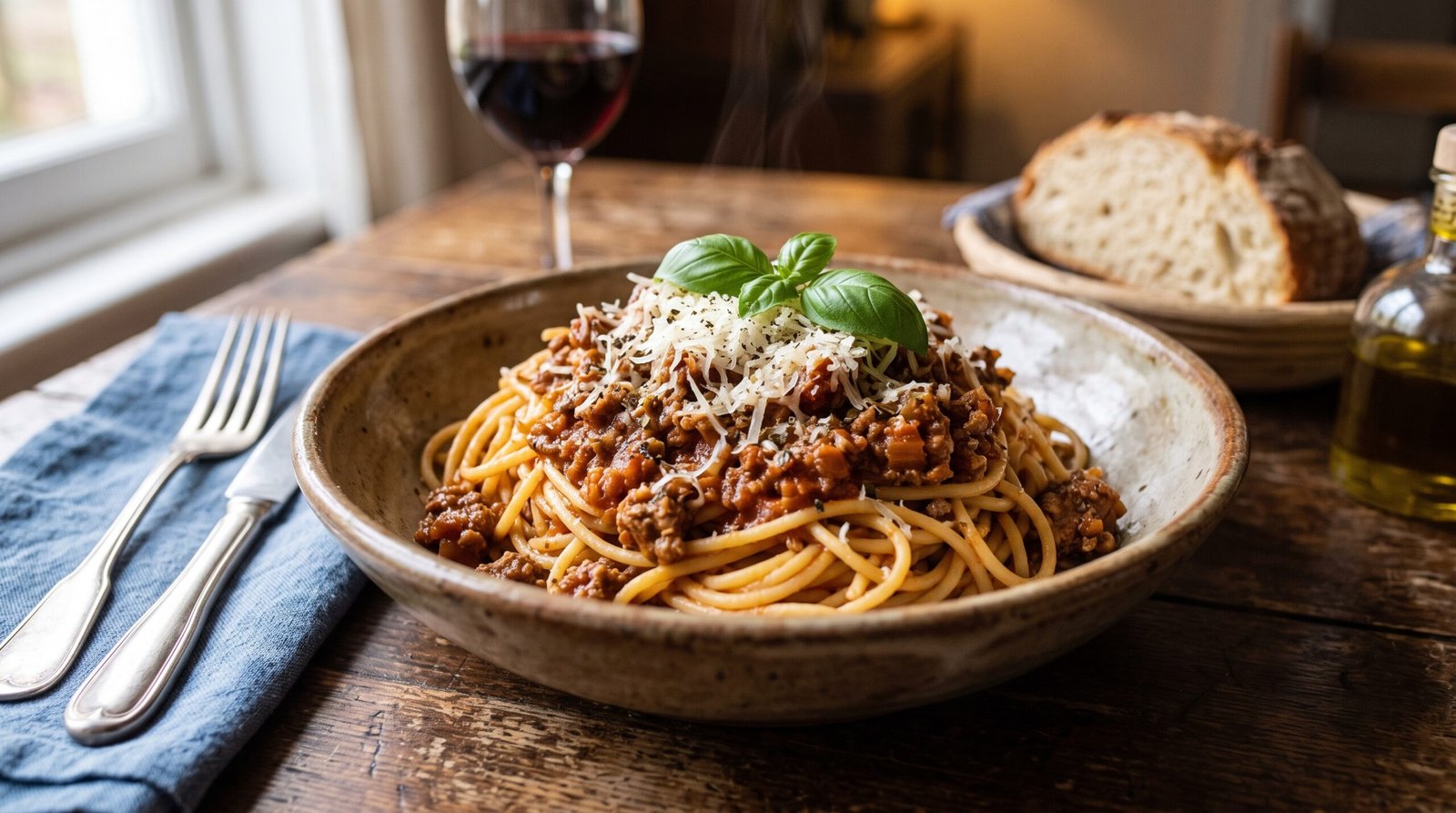
Pasta bolognese recipes for every taste: discover classic, quick, vegetarian and vegan variations, plus handy tips for a delicious Italian meal!
Looking for an easy and delicious spaghetti bolognese recipe? This classic Italian-inspired dish combines spaghetti with a rich and flavorful bolognese sauce made with ground beef, tomatoes, onion, garlic, herbs and parmesan cheese. The sauce simmers gently to develop a deep, comforting flavor and pairs perfectly with al dente spaghetti. Whether you are making a quick family dinner or craving a cozy homemade pasta meal, this simple spaghetti bolognese recipe is a delicious choice for any occasion.
Pasta Bolognese Recipes at a Glance
| Recipe | Time | Best for |
|---|---|---|
| Classic Pasta Bolognese | 45 min | Family dinner |
| Quick Pasta Bolognese | 30 min | Busy weeknights |
| Traditional Ragu alla Bolognese | 2-3 hours | Weekend cooking |
| Vegetarian Bolognese | 35 min | Meat-free dinner |
| Vegan Bolognese | 35 min | Plant-based meals |
| Lentil Bolognese | 40 min | Hearty meat-free sauce |
| Oven-Baked Pasta Bolognese | 50 min | Comfort food |
| Creamy Bolognese | 40 min | Extra silky sauce |
| Vegetable-Packed Bolognese | 40 min | Extra veggies |
| Bolognese with Tagliatelle | 45 min | Italian classic |
| Bolognese with Rigatoni | 45 min | Hearty pasta shapes |
| Meal-Prep Bolognese | 45 min | Cook ahead |
What Is Pasta Bolognese?
Pasta bolognese is a popular pasta dish that pairs pasta with a rich sauce made from ground meat, vegetables, tomatoes and herbs.
The international version is often made with spaghetti, but the traditional cuisine of Bologna knows ragu alla Bolognese as a slowly braised meat sauce that goes wonderfully with fresh tagliatelle. If you love Italian classics, explore more classic pasta dishes to eat in Italy for inspiration from across the country.
The official Italian culinary organization Accademia Italiana della Cucina registered an updated reference recipe for ragu alla Bolognese with the Bologna Chamber of Commerce in 2023. That version includes beef, pancetta, onion, carrot, celery, tomato, tomato paste, wine and optionally whole milk.
That does not mean every delicious pasta bolognese has to be exactly the same. For a quick weeknight meal, a simpler recipe works just fine.
1. Classic Pasta Bolognese
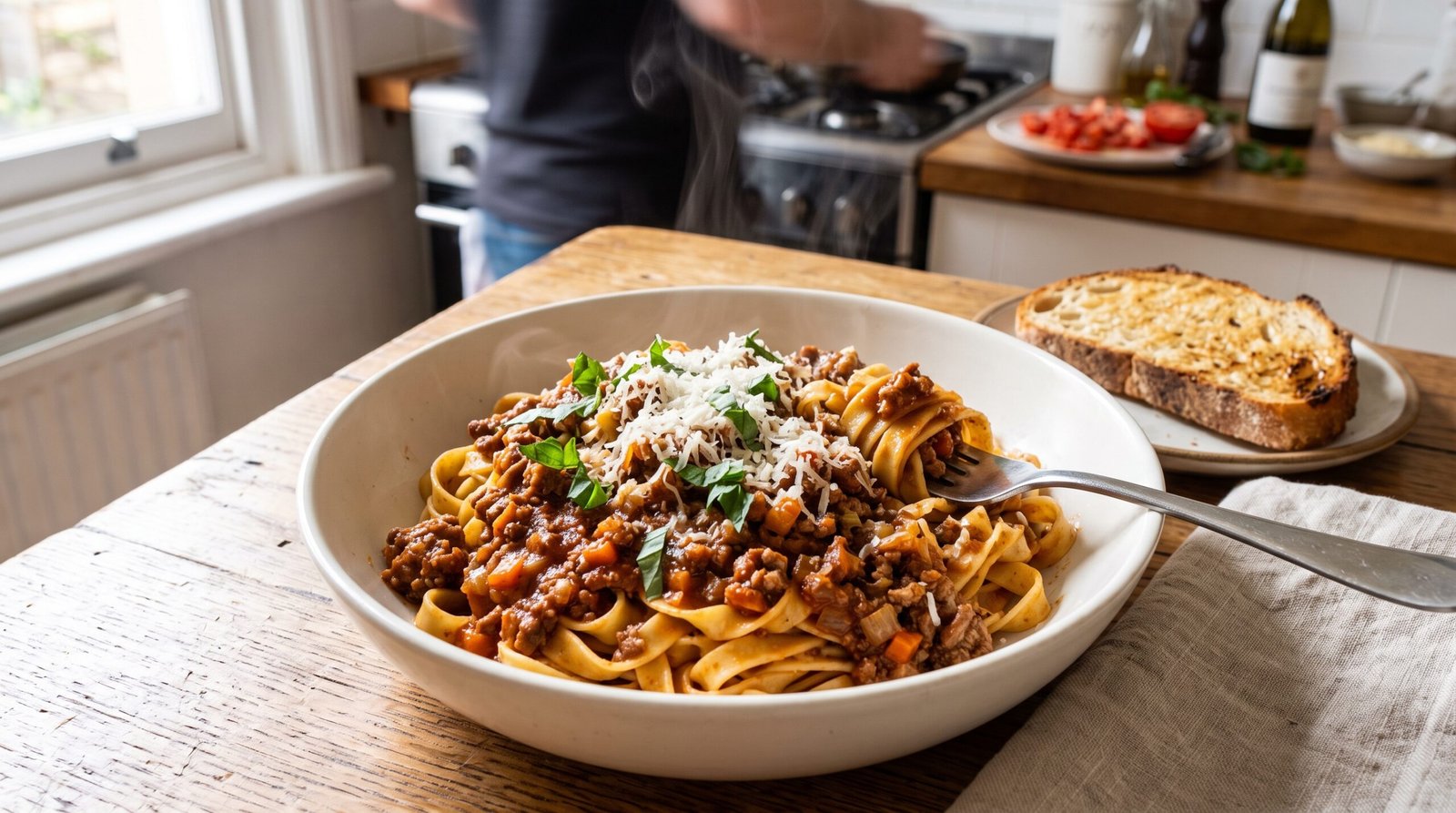
Classic pasta bolognese is one of the easiest ways to put a nourishing, comforting meal on the table.
Ingredients for 4 servings
- 400 g ground beef
- 350-400 g pasta
- 1 onion, finely chopped
- 1 carrot, finely chopped
- 1 celery stalk, finely chopped
- 2 garlic cloves, minced
- 2 tbsp tomato paste
- 400 g diced tomatoes
- 2 tbsp olive oil
- 100 ml broth
- 1 tsp Italian herbs
- Salt and black pepper
- Grated parmesan cheese, to serve
Instructions
- Heat the olive oil in a large pan.
- Soften the onion, carrot and celery for a few minutes.
- Add the garlic and cook briefly.
- Add the ground beef and cook until crumbly and lightly browned.
- Stir in the tomato paste.
- Add the diced tomatoes and broth.
- Season with Italian herbs, salt and pepper.
- Let the sauce simmer gently for at least 20-30 minutes.
- Cook the pasta until al dente.
- Toss the pasta with the sauce and serve with parmesan cheese.
Tip
If you have time, let the sauce simmer gently a little longer. The flavors become rounder and fuller.
2. Quick Pasta Bolognese
Short on time? A quick bolognese is ideal for a weeknight dinner.
Use the same base as the classic version, but go for:
- finely chopped vegetables
- diced tomatoes
- tomato paste
- ground beef
- dried Italian herbs
With well-prepped ingredients, you can have this version on the table in about 30 minutes.
For extra flavor, let the ground beef sear properly before adding the tomatoes. That gives the sauce more depth without hours of cooking.
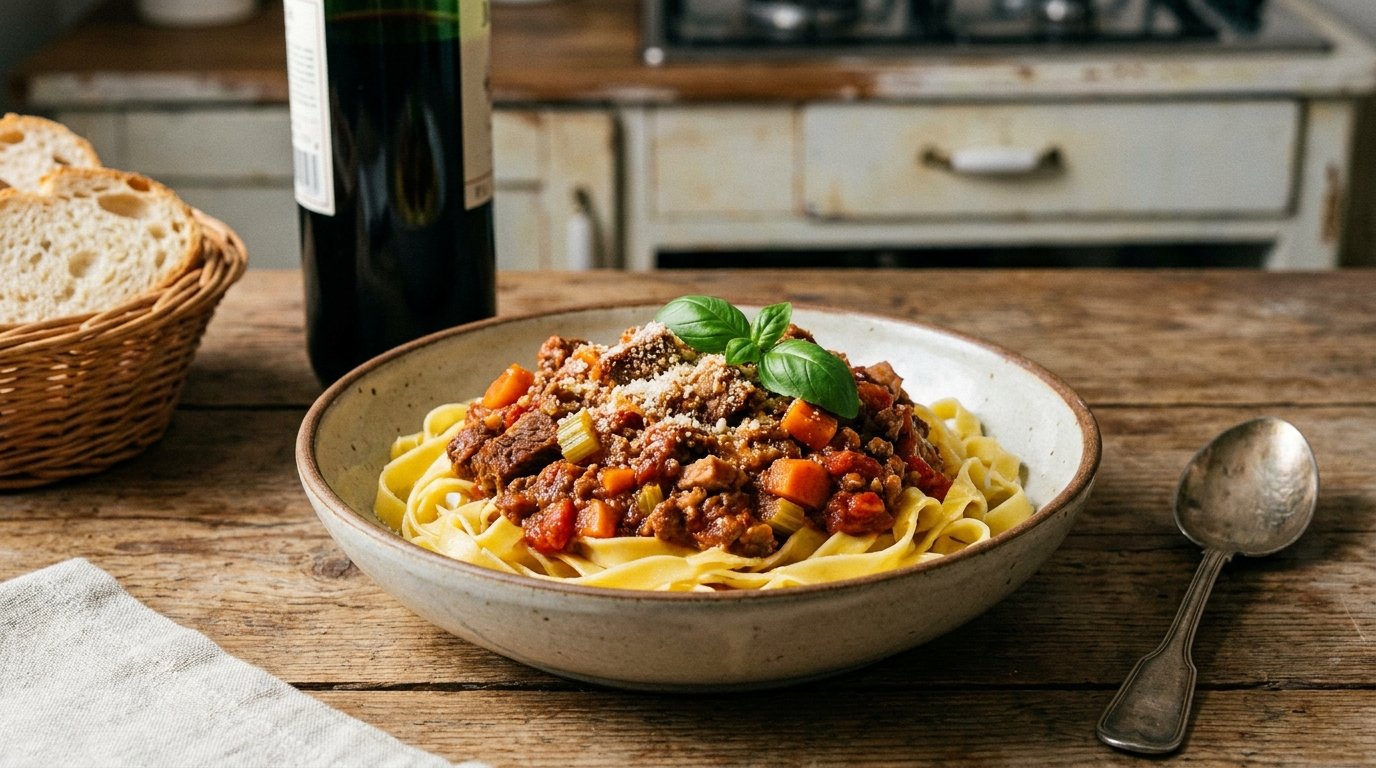
3. Traditional Ragu alla Bolognese
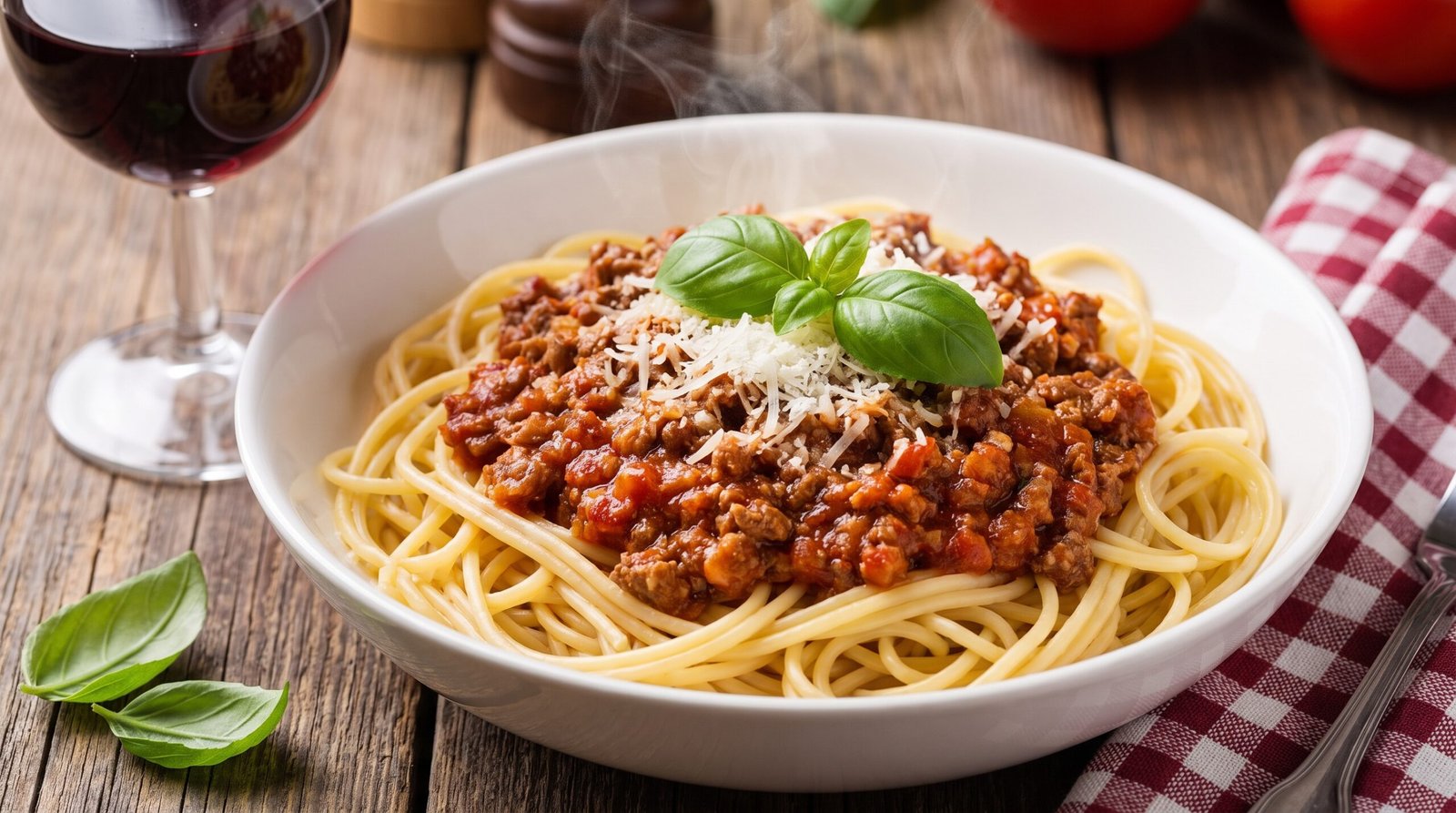
If you want a more traditional version, try ragu alla Bolognese.
The updated reference recipe from the Accademia Italiana della Cucina uses coarsely ground beef, fresh pancetta, onion, carrot, celery, wine, strained tomatoes, tomato paste and optionally whole milk. The sauce then simmers gently for about two hours; depending on the cut of meat and your preferred texture, it can go longer.
A traditional ragu is very different from a quick sauce you make in twenty minutes.
Key steps
- Gently render the pancetta in olive oil.
- Add finely chopped onion, carrot and celery.
- Let the vegetables soften slowly.
- Add the meat and cook until well browned.
- Pour in the wine and let it mostly evaporate.
- Add the tomato paste and tomatoes.
- Add warm broth or water as needed.
- Let the sauce simmer gently.
- Stir in milk if following the traditional preparation.
- Season with salt and pepper.
The Accademia also notes that families and restaurants prepare traditional ragu in different ways; the registered recipe is meant as a reliable traditional guideline, not the only possible version.
4. Vegetarian Pasta Bolognese
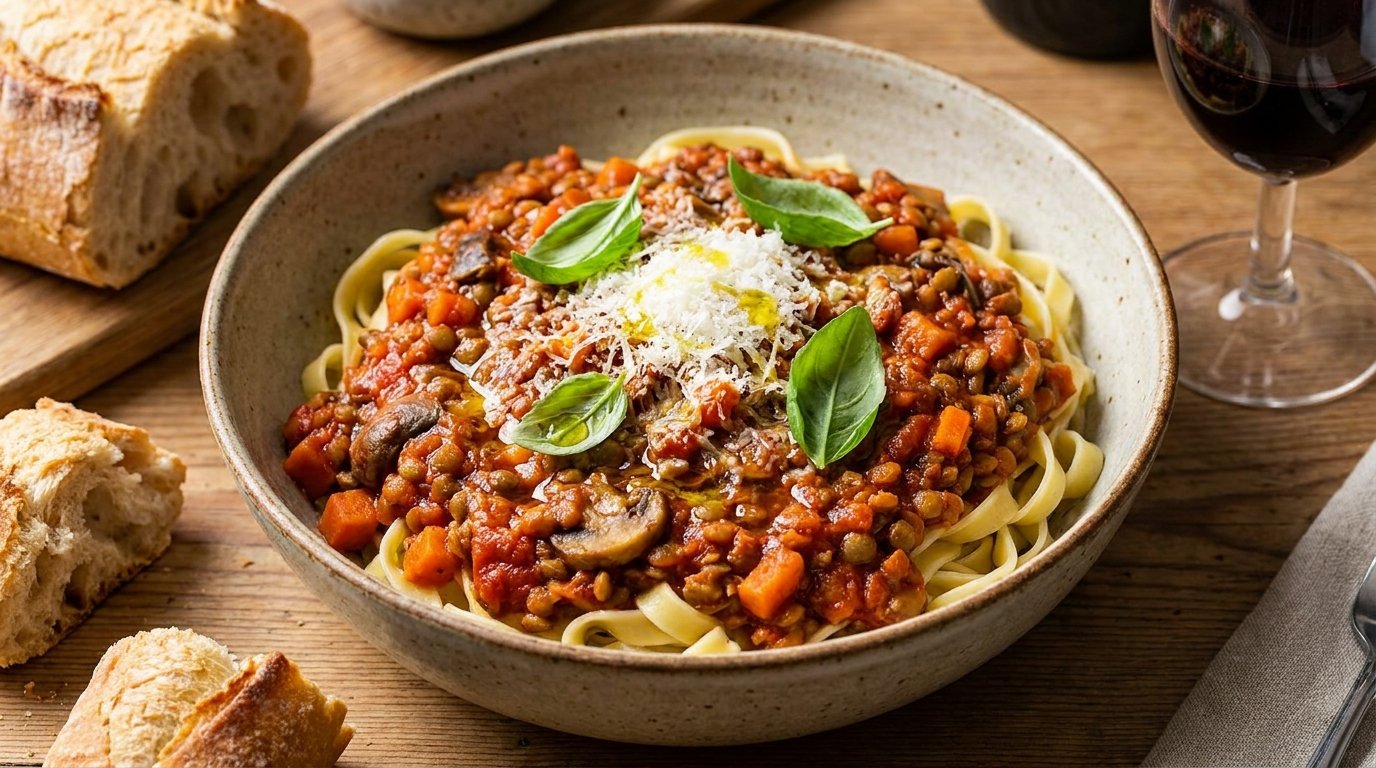
A vegetarian bolognese is a great choice when you want to skip the meat.
You can replace the ground meat with, for example:
- lentils
- mushrooms
- zucchini
- carrot
- eggplant
- vegetarian ground meat
Mushrooms add a savory depth, while lentils give the sauce a hearty texture.
Serve vegetarian bolognese with spaghetti, tagliatelle, penne or rigatoni.
5. Vegan Pasta Bolognese
For a fully plant-based bolognese, replace the meat with lentils, finely chopped mushrooms or a plant-based ground meat alternative.
You will also need:
- olive oil
- vegetables
- tomatoes
- tomato paste
- herbs
- vegetable broth
If you eat strictly vegan, always check the ingredients of dried pasta and any toppings.
6. Lentil Bolognese
Lentils are an excellent base for a hearty meat-free pasta sauce.
Soften onion, carrot and celery in olive oil. Add tomato paste, tomatoes, cooked lentils and broth.
Let everything simmer gently until the sauce is thick and flavorful.
This version works especially well with:
- spaghetti
- penne
- rigatoni
- tagliatelle
7. Oven-Baked Pasta Bolognese
Want to turn regular pasta bolognese into an extra-cozy meal? Make it a baked pasta dish.
Toss the cooked pasta with bolognese sauce, transfer everything to a baking dish, add grated cheese and bake until the top is golden and bubbling.
This version is handy when you are cooking for a crowd.
Extra tip
Make the sauce ahead. When it is time to eat, just cook the pasta, mix everything together and finish the dish in the oven.
8. Creamy Bolognese
Creamy bolognese is the classic sauce with a silky twist: a splash of cream or a spoonful of mascarpone stirred in at the end makes it extra smooth and rich.
Best for: anyone who loves a milder, velvety sauce – kids tend to love this one.
Key ingredients: classic bolognese base, 100 ml heavy cream or mascarpone, extra parmesan.
3 quick steps
- Make the classic bolognese sauce and let it simmer for 20-30 minutes.
- Stir in the cream or mascarpone and warm through for 2 minutes – do not let it boil.
- Toss with al dente pasta and finish with plenty of parmesan.
9. Vegetable-Packed Bolognese
This version loads the classic sauce with extra vegetables, so it is colorful, nutritious and still full of flavor.
Best for: getting more veggies into dinner without any complaints.
Key ingredients: classic bolognese base, zucchini, bell pepper, mushrooms, a handful of spinach.
3 quick steps
- Dice the extra vegetables small so they melt into the sauce.
- Soften them together with the onion, carrot and celery before adding the meat.
- Simmer for 25-30 minutes, then toss with pasta and parmesan.
10. Bolognese with Tagliatelle
In Bologna, ragu is traditionally served with fresh tagliatelle – and for good reason. The wide ribbons catch the rich sauce in every bite.
Best for: an authentic Italian-style dinner.
Key ingredients: fresh or dried tagliatelle, classic bolognese or traditional ragu, parmesan.
3 quick steps
- Prepare your favorite bolognese sauce (classic or traditional ragu).
- Cook the tagliatelle until just al dente; fresh pasta needs only 2-3 minutes.
- Toss the pasta directly in the sauce with a splash of pasta water and serve with parmesan.
11. Bolognese with Rigatoni
Rigatoni’s large tubes are perfect for a thick, hearty bolognese – the sauce gets trapped inside each piece.
Best for: a sturdy, satisfying weeknight dinner.
Key ingredients: rigatoni, thick bolognese sauce, mozzarella or parmesan for topping.
3 quick steps
- Make a slightly thicker bolognese by simmering it a few minutes longer.
- Cook the rigatoni al dente and toss with the sauce.
- Top with cheese and serve – or bake for 10 minutes for a golden crust.
12. Meal-Prep Bolognese
Bolognese is one of the best sauces for meal prep: make a big batch once and enjoy easy dinners all week.
Best for: busy weeks and freezer-friendly cooking.
Key ingredients: a double batch of classic bolognese, portion-sized containers.
3 quick steps
- Cook a double batch of the classic sauce and let it cool completely.
- Divide into portions and refrigerate or freeze (see the meal-prep guide below).
- Reheat the sauce and cook fresh pasta when you are ready to eat.
Which Pasta Goes Best with Bolognese?
Not every pasta shape gives the same result.
Tagliatelle
Tagliatelle is an excellent choice with a rich meat sauce. The wide ribbons carry plenty of sauce.
Spaghetti
Spaghetti is the world-famous bolognese pairing and an easy choice for a quick family meal.
Rigatoni
The large tube-shaped pasta works well with thick, hearty sauces.
Penne
Penne is practical for baked dishes and everyday pasta meals. For more tube-shaped pasta inspiration, check out our cavatappi pasta recipes.
Quick chooser
| Pasta shape | Pairs with |
|---|---|
| Tagliatelle | Rich ragu |
| Spaghetti | Classic family meal |
| Rigatoni | Thick, hearty bolognese sauces |
| Penne | Quick meals |
| Pappardelle | Very hearty meat sauce |
What Is in a Traditional Bolognese Sauce?
According to the updated 2023 reference recipe from the Accademia Italiana della Cucina, a traditional ragu alla Bolognese includes:
- beef
- pancetta
- onion
- carrot
- celery
- wine
- strained tomatoes
- tomato paste
- olive oil
- broth
- salt and pepper
- optionally whole milk
The sauce is cooked slowly so the meat and vegetables have plenty of time to develop flavor.
How to Make a Better Bolognese Sauce
1. Sear the meat well
Do not throw the meat into the pan together with all the liquid right away. Give it time to brown first.
2. Give the vegetables time
Onion, carrot and celery form an important flavor base.
3. Use tomato paste
A small amount of tomato paste adds extra depth to the sauce.
4. Let the sauce simmer gently
A longer, gentle cook gives the sauce time to become fuller.
5. Cook the pasta al dente
Overcooked pasta can make a good sauce less enjoyable. See our guide on how to cook pasta perfectly.
6. Toss the pasta with the sauce
Do not just leave the pasta on the plate with sauce on top. Toss the pasta through the sauce so every bite is well coated.
Common Pasta Bolognese Mistakes
The sauce is too watery
Let the sauce simmer uncovered a little longer to reduce.
The sauce tastes flat
Check the salt and pepper, and give the vegetables and meat enough browning time.
The ground meat lacks flavor
Sear the meat well before adding the liquids.
The pasta is too soft
Cook the pasta according to the package and check it shortly before the end of the cooking time.
Too much sauce on the pasta
Start with a modest amount and add more as needed.
Can You Freeze Bolognese Sauce?
Yes. Bolognese sauce is great for making ahead and storing in portions.
Let the sauce cool down properly before transferring it to a suitable storage container. Divide large batches into smaller portions so you only thaw what you need.
For meal prep, it is usually better to store the sauce separately from the pasta. That way you can cook fresh pasta on the day.
Pasta Bolognese Meal Prep
Bolognese is ideal for meal prep because you can make a big pan of sauce in one go.
A simple approach:
- Make a large batch of bolognese sauce.
- Let the sauce cool down.
- Divide it into portions.
- Store the portions following safe food-storage practices.
- Cook fresh pasta when you are ready to eat.
- Heat the sauce through properly.
- Toss the pasta with the sauce just before serving.
Pasta Bolognese: Which Version Should You Choose?
| If you… | Choose… |
|---|---|
| want to eat quickly | Quick Bolognese |
| want a classic family dinner | Classic Bolognese |
| are looking for traditional Italian inspiration | Ragu alla Bolognese |
| eat vegetarian | Vegetarian Bolognese |
| eat vegan | Vegan Bolognese |
| want more vegetables | Vegetable-Packed Bolognese |
| want to cook ahead | Meal-Prep Bolognese |
| want comfort food | Oven-Baked Bolognese |
Pasta Bolognese FAQs
What is pasta bolognese?
Pasta bolognese is pasta with a rich sauce based on meat, vegetables and tomato. The exact ingredients and method vary from recipe to recipe.
Is spaghetti bolognese traditionally Italian?
Spaghetti with bolognese sauce is famous around the world. In Bologna’s traditional cuisine, however, ragu alla Bolognese is strongly associated with fresh tagliatelle. Italy’s culinary tradition includes several forms of pasta with ragu.
Which pasta is best for bolognese?
Tagliatelle is an excellent choice for a rich ragu. Spaghetti, rigatoni and other pasta shapes can work well too, depending on the type of sauce.
How long should bolognese simmer?
A quick version can cook for about 20-30 minutes, while a traditional ragu simmers much longer. The Accademia’s updated reference recipe mentions about two hours, with the option to cook longer depending on the preparation.
Can I make bolognese vegetarian?
Yes. Lentils, mushrooms, vegetables and vegetarian ground meat alternatives can be used to make a hearty meat-free sauce.
Can I freeze bolognese sauce?
Yes, you can freeze bolognese sauce in portions. For the best texture when reheating, store the sauce separately from the pasta.
Why does my bolognese sauce taste acidic?
An overly sharp tomato flavor can have several causes. Let the sauce cook longer and check the balance of salt, fat and other ingredients before adding extra sweeteners.
How do I make bolognese sauce thicker?
Let the sauce simmer gently so excess moisture evaporates. Do not just add large amounts of flour; a well-reduced sauce usually has better flavor and texture.
What is the difference between bolognese and meat sauce?
Bolognese, or ragu alla Bolognese, is a specific slow-cooked sauce from Bologna made with meat, soffritto, tomato, wine and sometimes milk. Meat sauce is a broader term for any tomato sauce with ground meat, often quicker and less traditional.
Can I make bolognese without wine?
Yes. Simply replace the wine with extra broth and a splash of balsamic vinegar or lemon juice for acidity. The sauce will still be rich and flavorful after a good simmer.
Tips for the Best Pasta Bolognese
A few simple principles matter for a flavorful bolognese:
- Use quality ingredients.
- Give the vegetables enough time.
- Sear the meat well.
- Let the sauce simmer gently.
- Cook the pasta al dente.
- Toss the pasta with the sauce.
- Use parmesan cheese as a fitting topping.
- Make extra sauce when you want to meal prep.
A good bolognese does not have to be complicated. The key is matching the preparation to the kind of meal you want to make.
Conclusion
Pasta bolognese remains a beloved choice in 2026 for a flavorful, comforting meal. With a rich tomato sauce, seasoned ground meat, onion, garlic and Italian herbs, you can easily make a delicious pasta for the whole family. Serve the bolognese sauce with perfectly cooked pasta and finish with freshly grated parmesan for extra flavor. Whether you want a quick weeknight meal or a classic Italian dish, this simple pasta bolognese recipe is a delicious addition to your recipe collection. If you love Italian sausage pasta, try our pasta alla norcina recipe next.
Planning Meals with Pasta Bolognese Recipes
Use these pasta bolognese recipes as a weekly meal plan, and cook a different version each time you try one. The pasta bolognese recipes here range from a 30-minute quick version to a slow traditional ragu. Planning around pasta bolognese recipes helps you shop once and cook several satisfying dinners.
Start with the classic version among the pasta bolognese recipes, then try the vegetarian and vegan versions for meat-free nights. The pasta bolognese recipes also work well for meal prep, since the sauce freezes beautifully. If time is short, choose one of the quick pasta bolognese recipes and keep the slower versions for the weekend.
Which of the pasta bolognese recipes is best for beginners?
Begin with the classic version, since the pasta bolognese recipes in this guide explain each step clearly. Once you feel confident, explore the other pasta bolognese recipes for new flavors.
Can I freeze pasta bolognese recipes for later?
Yes. Most pasta bolognese recipes freeze well when the sauce is stored separately from the pasta. Cook fresh pasta when you reheat the pasta bolognese recipes for the best texture.
How do I choose among the pasta bolognese recipes?
Pick by time and appetite: quick pasta bolognese recipes suit busy weeknights, while the traditional ragu suits a slow weekend cook. The full set of pasta bolognese recipes gives you a version for every occasion.
In short, these pasta bolognese recipes make it easy to enjoy a comforting Italian dinner any night of the week.

3 thoughts on “Pasta Bolognese Recipes: 12 Tasty & Easy Variations”