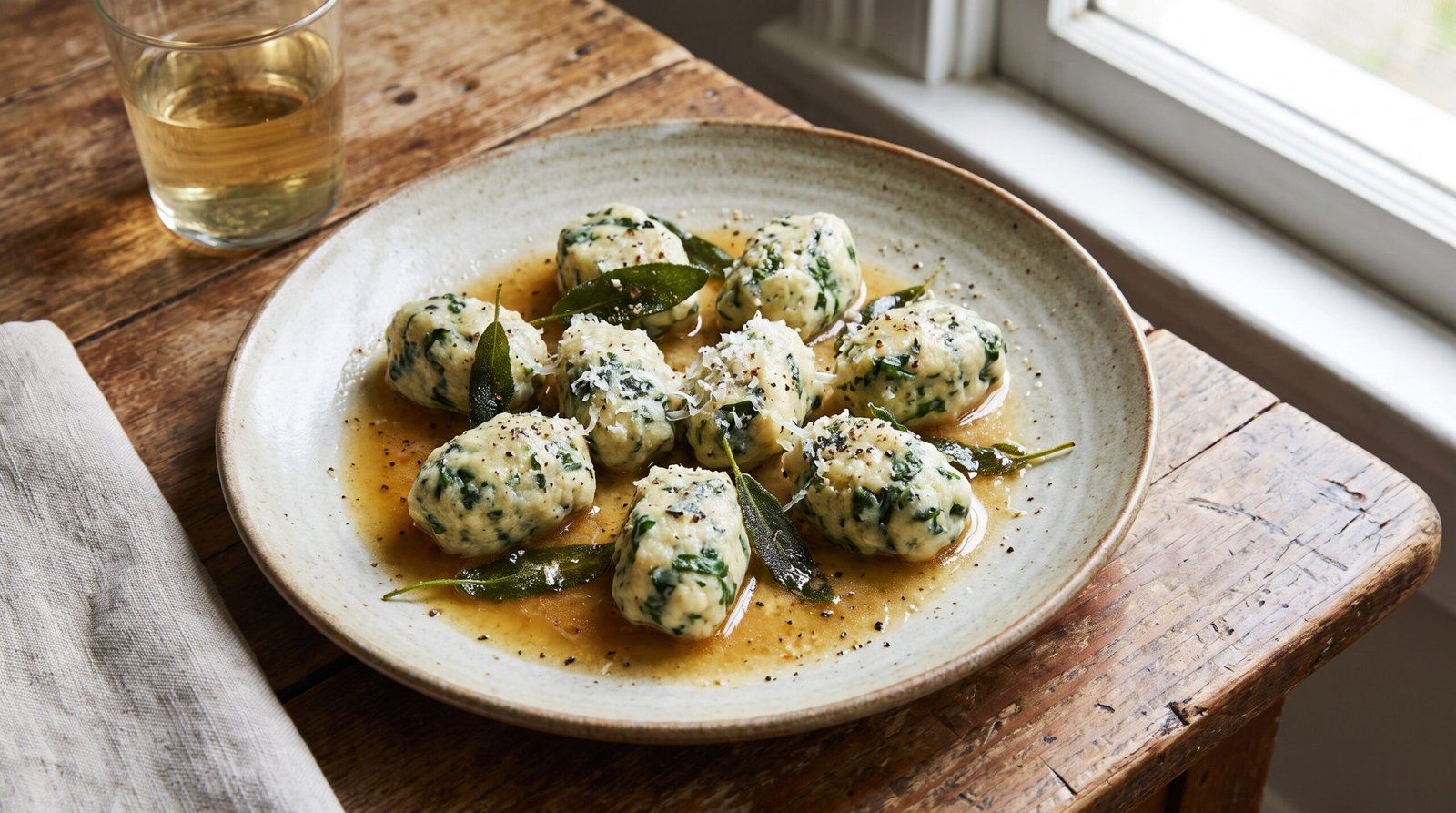
If you love ravioli, ricotta, and classic Italian flavors, gnudi pasta is a dish you need to try. These soft, pillowy Tuscan dumplings are made with the flavorful filling traditionally found inside ravioli but without the pasta wrapper. That is why gnudi are often described as naked ravioli.
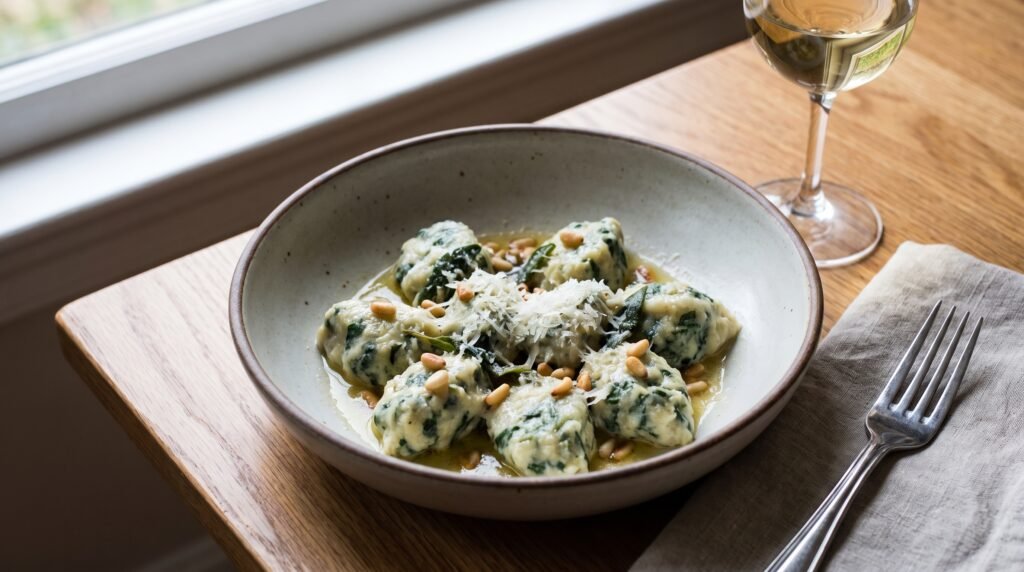
This authentic-style gnudi pasta recipe combines creamy ricotta, spinach, Parmesan, egg, flour, and a touch of nutmeg. The gnudi are gently cooked until tender and served with a simple brown butter and sage sauce.
The most important secret is keeping the ricotta and spinach as dry as possible. Too much moisture can make gnudi difficult to shape or cause them to fall apart while cooking.
What Is Gnudi Pasta?
Gnudi pasta is a traditional Tuscan Italian dish made from a mixture of ricotta, cooked greens, cheese, egg, and a small amount of flour. Unlike ravioli, the filling is not enclosed in pasta dough.
The word gnudi refers to the idea of being “naked” or without the pasta covering. In other words, gnudi are essentially the filling of ravioli served on its own.
Although people commonly search for “gnudi pasta,” gnudi are technically closer to soft Italian dumplings than traditional pasta noodles.
They are delicate, rich, tender, and surprisingly simple once you understand how to control the moisture in the mixture.
Why You’ll Love This Gnudi Pasta Recipe
- Soft and tender Italian dumplings
- Classic spinach and ricotta combination
- Authentic Tuscan inspiration
- No pasta dough required
- Ready in about 45 minutes
- Perfect with brown butter and sage
- Easy enough for a special weeknight dinner
- Excellent vegetarian Italian main course
- Includes practical tips to prevent gnudi from falling apart
Gnudi vs. Ravioli vs. Gnocchi
These three Italian dishes can look similar, but they are prepared differently.
| Dish | What makes it different? |
|---|---|
| Gnudi | Ravioli-style filling cooked without a pasta wrapper |
| Ravioli | Filling enclosed inside pasta dough |
| Gnocchi | Italian dumplings traditionally made from ingredients such as potato, flour, or ricotta |
| Malfatti | A closely related Italian dumpling, often associated with spinach and ricotta.a |
Gnudi are particularly associated with Tuscany, where they are also known by regional names such as malfatti or other variations depending on the area.
Ingredients for Gnudi Pasta
For the Gnudi
- 15 ounces (425 g) whole-milk ricotta, well drained
- 10 ounces (280 g) fresh spinach
- 1 large egg
- 1/2 cup finely grated Parmesan cheese
- 2 to 3 tablespoons all-purpose flour, plus more for shaping
- 1/4 teaspoon freshly grated nutmeg
- 1/2 teaspoon salt, or to taste
- 1/4 teaspoon freshly ground black pepper
For the Brown Butter Sage Sauce
- 6 tablespoons unsalted butter
- 8 to 10 fresh sage leaves
- 1/4 cup freshly grated Parmesan
- Small pinch of nutmeg, optional
- Freshly ground black pepper, optional
For Serving
- Extra Parmesan
- Fresh sage leaves
- Black pepper
- Optional lemon zest
The exact quantities can vary between traditional preparations. Different Italian and chef recipes use slightly different amounts of ricotta, greens, flour, and cheese, but they consistently emphasize well-drained ingredients and gentle cooking.
How to Make Gnudi Pasta
Step 1: Drain the Ricotta
Place the ricotta in a fine-mesh strainer over a bowl.
Let it drain for at least 30 minutes. If your ricotta is particularly wet, refrigerate it in the strainer for several hours or overnight.
This step matters because excess liquid makes the gnudi mixture too loose.
Pro tip: A drier ricotta means you need less flour, which helps keep the finished gnudi light and tender.
Step 2: Cook the Spinach
Wash the fresh spinach and place it in a large pan over medium heat.
Cook until completely wilted.
Transfer the spinach to a colander and allow it to cool enough to handle.
Now squeeze out as much water as possible.
This is one of the most important steps in the entire recipe. Traditional recipes repeatedly emphasize removing excess moisture from the spinach because wet greens can make gnudi unstable during cooking.
Step 3: Chop the Spinach
Finely chop the squeezed spinach.
You want small pieces that distribute evenly throughout the ricotta mixture.
If the spinach is left in large pieces, shaping the gnudi can become more difficult.
Step 4: Mix the Gnudi Filling
In a large bowl, combine:
- Drained ricotta
- Chopped spinach
- Parmesan
- Egg
- Flour
- Nutmeg
- Salt
- Black pepper
Mix gently until everything is evenly combined.
The mixture should be soft and slightly sticky, but it should still hold together when pressed.
Avoid adding excessive flour.
Too much flour can make your gnudi heavy and gummy instead of soft and delicate.
Step 5: Test One Gnudo
Before shaping the entire batch, cook one test gnudo.
Shape a small piece and gently place it into barely simmering salted water.
If it holds together, continue.
If it breaks apart, the mixture probably needs a little more flour or Parmesan—or the ingredients may still contain too much moisture.
This simple test can save the entire batch.
How to Shape Gnudi Pasta
There are several ways to shape gnudi.
Method 1: Floured Hands
Scoop out approximately a walnut-sized portion of the mixture.
Roll it gently between lightly floured hands.
Shape it into a small round or slightly oval dumpling.
Method 2: Two Spoons
Use two teaspoons to gently form the mixture into a small oval shape.
This method is useful when the mixture feels too soft to roll comfortably.
Method 3: Bowl-Rolling Technique
A particularly interesting traditional-style technique is to place a walnut-sized portion into a small bowl containing a little flour and gently roll the bowl in a circular motion.
The mixture gradually forms into a smooth oval shape. This method has also been described by Rachel Roddy for spinach and ricotta gnudi.
Place each finished gnudo on a lightly floured tray while you shape the rest.
Step 6: Chill the Gnudi Pasta
Once all the gnudi are shaped, refrigerate them for about 20 to 30 minutes.
Chilling helps them firm up before they enter the cooking water.
If your mixture is particularly soft, a longer chilling period can be helpful.
Step 7: Cook the Gnudi
Bring a large pot of salted water to a gentle simmer.
Avoid a violent rolling boil.
Carefully lower the gnudi into the water in batches. Do not overcrowd the pot.
Cook until the gnudi rise toward the surface and feel cooked through.
Depending on their size and recipe formulation, cooking times can vary from roughly 2 to 5 minutes. Traditional recipes commonly recommend gentle water and removing the dumplings once they rise.
Use a slotted spoon to transfer them directly to the sauce.
Step 8: Make Brown Butter Sage Sauce
While the gnudi cook, melt the butter in a large skillet over medium-low heat.
Add the sage leaves.
Continue cooking until the butter becomes foamy and develops a golden-brown color.
The sage should become fragrant and slightly crisp.
Remove the pan from the heat if the butter starts to darken too much.
Step 9: Finish the Gnudi Pasta
Transfer the cooked gnudi into the brown butter sauce.
Gently spoon the butter over them.
Avoid aggressively stirring because gnudi are delicate.
Finish with freshly grated Parmesan and a little black pepper.
Serve immediately.
Why Do Gnudi Pasta Fall Apart?
This is the most important troubleshooting question when making gnudi.
If your gnudi disintegrate in the cooking water, check these common problems.
1. Your Ricotta Is Too Wet
Wet ricotta creates a loose mixture.
Drain it thoroughly before mixing.
2. Your Spinach Contains Too Much Water
Cooked spinach holds a surprising amount of liquid.
Squeeze it firmly until very little water remains.
3. The Mixture Needs a Little More Binder
If the mixture refuses to hold its shape, add a small amount of flour or Parmesan.
Don’t add a large amount at once.
4. The Water Is Boiling Too Hard
A vigorous boil can break delicate gnudi apart.
Use gently simmering water instead.
5. The Gnudi Are Too Large
Large gnudi are more difficult to handle and can be fragile.
Keep them around walnut size.
6. You Skipped Chilling
A short refrigeration period can help the shaped gnudi become firmer before cooking.
7. You Overcrowded the Pot
Cooking too many gnudi together makes them easier to damage.
Work in batches when necessary.
The common thread across traditional and modern recipes is moisture control: both spinach and ricotta should be well drained before you shape the mixture.
How to Get Soft, Pillowy Gnudi
The goal is not to make gnudi as firm as possible.
The ideal texture is soft, tender, and delicate.
Follow these rules:
- Use whole-milk ricotta when possible.
- Drain the ricotta well.
- Squeeze spinach thoroughly.
- Use only enough flour to help the mixture hold together.
- Shape the gnudi gently.
- Chill before cooking.
- Use gently simmering water.
- Avoid stirring them aggressively.
The less unnecessary flour you use, the better chance you have of keeping that soft ricotta texture.
What Sauce Goes With Gnudi Pasta?
Brown butter and sage is one of the most classic choices.
But you have several excellent options.
Brown Butter and Sage
Nutty brown butter and aromatic sage complement the creamy ricotta beautifully.
Add Parmesan for extra richness.
Simple Tomato Sauce
A light tomato sauce provides acidity that balances the richness of the gnudi.
This is especially good if you prefer a brighter Italian-style dinner.
Marinara Sauce
A simple marinara works well for an easy weeknight version.
Lemon Butter
Brown butter with a little fresh lemon zest can make the dish feel lighter and brighter.
Fresh Tomato and Basil
During summer, fresh tomatoes and basil make an excellent alternative to butter-based sauces.
Can You Make Gnudi Ahead of Time?
Yes.
You can shape the gnudi ahead of time and keep them refrigerated on a lightly floured tray.
Keep them covered so they don’t dry out.
For the best texture, cook them as soon as reasonably possible after shaping.
Can You Freeze Gnudi Pasta?
Gnudi can also be prepared for freezing.
Arrange the uncooked gnudi in a single layer on a floured or parchment-lined tray and freeze until firm.
Then transfer them to an airtight freezer-safe container.
Avoid piling soft gnudi together before they are frozen because they may stick.
For the best quality, use frozen gnudi within a reasonable storage period and cook them carefully from chilled or frozen according to their firmness.
Common Gnudi Pasta Mistakes to Avoid
Using Wet Ricotta
This is one of the easiest ways to create a loose mixture.
Not Squeezing Spinach
Cooked spinach can hold a lot of water.
Adding Too Much Flour
More flour does not automatically mean better gnudi.
Too much can make them dense.
Boiling Too Aggressively
Gentle water is better for delicate dumplings.
Making Them Too Large
Smaller gnudi are easier to shape and cook evenly.
Stirring Them Too Much
Let the cooking water do the work.
Handle them gently with a slotted spoon.
Can You Make Gnudi Pasta Without Spinach?
Yes.
Spinach is traditional and popular, but gnudi can be made with other greens.
Swiss chard is another classic choice and appears in several Italian preparations.
The important thing is to cook and drain the greens thoroughly before adding them to the ricotta mixture.
Can Gnudi Pasta Be Made Gluten-Free?
A gluten-free version is possible.
The main ingredient to reconsider is regular wheat flour.
You can experiment with a suitable gluten-free flour blend or another gluten-free binder designed for dumplings.
Because the structure of gnudi depends heavily on moisture balance, test one dumpling before cooking the entire batch.
What to Serve With Gnudi Pasta
Gnudi are rich and satisfying, so simple side dishes work particularly well.
Try:
- Light green salad
- Roasted vegetables
- Steamed asparagus
- Sautéed zucchini
- Fresh tomatoes
- Crusty Italian-style bread
- Simple arugula salad
A lightly dressed green salad is especially useful for balancing the richness of ricotta, Parmesan, and butter.
How to Store Leftover Gnudi Pasta
Store cooked gnudi in an airtight container in the refrigerator.
For the best texture, reheat them gently in a skillet with a small amount of butter or sauce.
Avoid aggressive reheating because the dumplings are delicate.
Gnudi Pasta Recipe Card
Authentic Tuscan Spinach & Ricotta Gnudi Pasta
Prep Time: 30 minutes
Chilling Time: 20–30 minutes
Cook Time: 5–10 minutes
Total Time: About 1 hour
Servings: 4
Cuisine: Italian / Tuscan
Category: Main Course / Pasta Alternative
Ingredients
- 15 oz whole-milk ricotta, drained
- 10 oz fresh spinach
- 1 large egg
- 1/2 cup grated Parmesan
- 2–3 tablespoons all-purpose flour
- 1/4 teaspoon nutmeg
- 1/2 teaspoon salt
- 1/4 teaspoon black pepper
Brown Butter Sage Sauce
- 6 tablespoons unsalted butter
- 8–10 sage leaves
- 1/4 cup Parmesan
Instructions
- Drain the ricotta thoroughly.
- Wilt the spinach.
- Cool and squeeze out as much water as possible.
- Finely chop the spinach.
- Combine spinach, ricotta, Parmesan, egg, flour, nutmeg, salt, and pepper.
- Mix until soft but shapeable.
- Shape walnut-sized gnudi.
- Lightly coat them with flour.
- Chill for 20–30 minutes.
- Bring salted water to a gentle simmer.
- Cook the gnudi in batches.
- Remove carefully with a slotted spoon.
- Brown the butter with sage.
- Toss the cooked gnudi gently with the butter.
- Finish with Parmesan and serve immediately.
Frequently Asked Questions About Gnudi Pasta
What is gnudi pasta?
Gnudi pasta is a common name for a traditional Tuscan dish made from a ravioli-style filling of ingredients such as ricotta, spinach, cheese, and egg, but without the pasta wrapper. The result is a soft Italian dumpling often served with butter and sage.
What does Gnudi Pastamean?
Gnudi refers to the idea of being “naked” because the ravioli filling is prepared without the pasta shell.
Are gnudi the same as gnocchi?
No. They are both dumpling-like Italian dishes, but gnudi are traditionally based on a ricotta-and-greens filling similar to ravioli filling, while gnocchi can be made from several different bases, including potato.
What is the difference between gnudi and ravioli?
Ravioli has a pasta dough wrapper surrounding its filling. Gnudi are essentially the filling without that wrapper.
Why do my gnudi fall apart?
The most common reasons are overly wet ricotta, insufficiently squeezed spinach, too little binder, overly vigorous boiling, or handling the dumplings too roughly.
How long should gnudi cook?
Cooking time depends on their size and recipe, but many traditional preparations cook gnudi for only a few minutes in gently simmering salted water. Remove them carefully once they rise and are cooked through.
What is the best sauce for gnudi?
Brown butter and sage is one of the classic pairings. Tomato sauce, marinara, lemon butter, and fresh tomato-basil sauce are also excellent choices.
Can I use frozen spinach?
Yes. Thaw it completely and squeeze it extremely well before adding it to the mixture. Frozen spinach can contain considerable water, so moisture control is especially important.
Can I freeze homemade gnudi?
Yes. Freeze shaped uncooked gnudi individually on a tray before transferring them to a freezer-safe container.
Can I make gnudi without eggs?
Some traditional variations differ in their use of eggs. If you remove the egg, the mixture may become more fragile, so you will need to pay especially close attention to moisture and binding.
Final Thoughts
Gnudi pasta is one of those Italian dishes that looks impressive but relies on surprisingly simple ingredients.
Ricotta, spinach, Parmesan, egg, flour, and nutmeg come together to create soft Tuscan dumplings that deliver the best part of ravioli without the work of making pasta dough.
The secret is simple: keep the ricotta and spinach dry, use just enough flour, shape the gnudi gently, and cook them in gently simmering water.
Serve them with brown butter and sage, finish with plenty of Parmesan, and you have a comforting Italian meal that’s elegant enough for guests but simple enough for a homemade dinner.
Recipe Summary
The key to successful gnudi is moisture control. Drain the ricotta, squeeze the spinach thoroughly, avoid excessive flour, and cook the dumplings gently. Once you master those steps, homemade gnudi pasta becomes much easier and reliably tender.