
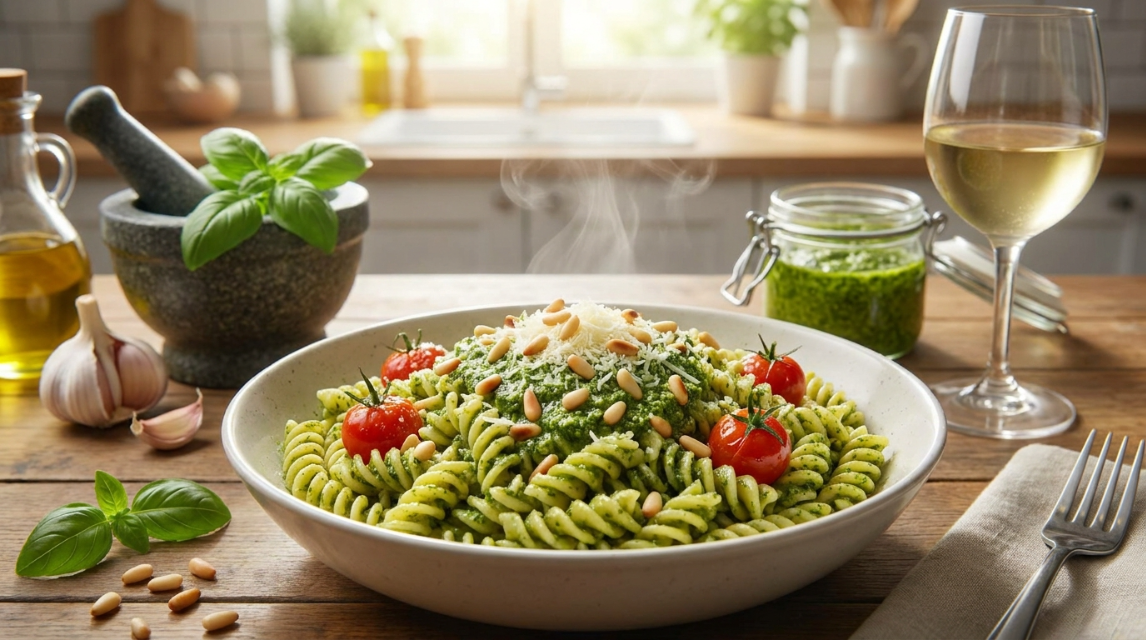
Pesto Pasta is a quick, fresh, and flavorful Italian-inspired dish made with tender pasta, fragrant basil pesto, Parmesan cheese, and a splash of starchy pasta water. Ready in about 20 minutes, this easy pesto pasta recipe is perfect for busy weeknight dinners. Enjoy it with homemade or store-bought pesto, or customize it with chicken, shrimp, cherry tomatoes, spinach, or your favorite vegetables for a delicious and satisfying meal.
Why You’ll Love This Pesto Pasta
- Ready in about 20 minutes
- Uses simple everyday ingredients
- Works with homemade or store-bought pesto
- Easy to make vegetarian
- Simple to adapt with chicken, shrimp, or vegetables
- Fresh basil and Parmesan create plenty of flavor
- Pasta water helps create a smoother sauce
- Perfect for busy weeknight dinners
If you enjoy comforting pasta dinners, explore our collection of Creamy Pasta Recipes for more easy dinner ideas.

Pesto Pasta Ingredients
You only need a handful of ingredients to make this easy pesto pasta.
For the Pasta
- 12 ounces pasta, such as spaghetti, linguine, fusilli, or penne
- 3/4 cup basil pesto
- 1/2 cup freshly grated Parmesan cheese
- 1/2 cup reserved pasta water, plus more if needed
- 1 tablespoon extra-virgin olive oil, if needed
- Salt, for the pasta water
- Freshly ground black pepper, to taste
Optional Add-Ins
For extra flavor or texture, try:
- 1 cup halved cherry tomatoes
- 1 cup baby spinach
- 1/2 cup toasted pine nuts
- Fresh basil leaves
- Red pepper flakes
- Grilled chicken
- Cooked shrimp
- Fresh mozzarella or burrata
- A squeeze of fresh lemon juice
What Is Pesto?
Pesto is a flavorful Italian sauce traditionally associated with Liguria. Traditional Pesto Genovese uses basil, pine nuts, garlic Parmesan and/or Pecorino cheese, salt, and extra-virgin olive oil. Italia.it identifies these as the traditional ingredients of the famous Ligurian green sauce.
Traditional pesto is commonly served with pasta and other first courses. The classic preparation is closely connected with Genoa and Liguria.
For an everyday pesto pasta dinner, however, a good-quality prepared basil pesto can save time without sacrificing convenience.
What Pasta Is Best for Pesto?
Almost any pasta can work with pesto, but some shapes are especially good at carrying the sauce.
| Pasta Shape | Why It Works |
|---|---|
| Spaghetti | Classic and easy to toss |
| Linguine | Broad surface holds pesto well |
| Fusilli | Spirals trap pesto in the ridges |
| Penne | Tubes hold sauce inside |
| Rigatoni | Large ridges work well with thicker pesto |
| Farfalle | Great for vegetables and chunky additions |
| Trofie | A traditional Ligurian-style pairing |
For a classic weeknight version, spaghetti or linguine is an easy choice. If you want more sauce in every bite, fusilli and other ridged shapes are excellent.
How to Make Pesto Pasta
Step 1: Cook the Pasta
Bring a large pot of generously salted water to a boil.
Add the pasta and cook according to the package directions until al dente.
Before draining, scoop out about 1/2 cup of the cooking water and set it aside.
Do not skip this step. The starchy water is one of the easiest ways to improve the texture of pesto pasta.
Step 2: Warm the Pesto Gently
Place the pesto in a large bowl or skillet that is off the heat.
You do not need to cook pesto like a traditional pasta sauce. Keeping it away from intense heat helps preserve its fresh basil character.
If your pesto is very thick, stir in a small splash of the reserved pasta water.
Step 3: Add the Hot Pasta
Drain the pasta and immediately add it to the pesto.
Toss well so the pesto begins coating the pasta.
Step 4: Add Pasta Water
Add the reserved pasta water a tablespoon or two at a time while tossing.
Keep mixing until the pesto becomes smooth and lightly coats the pasta.
You may not need all of the water. Add only enough to reach the consistency you like.
Step 5: Finish With Parmesan
Add freshly grated Parmesan and toss again.
Taste and adjust with:
- Black pepper
- Salt, if needed
- More pesto
- More pasta water
- A small drizzle of olive oil
Step 6: Serve Immediately
Transfer the pesto pasta to bowls.
Finish with extra Parmesan, fresh basil, cracked black pepper, or toasted pine nuts.
For a brighter flavor, add a small squeeze of lemon juice.
The Pasta Water Trick: Why It Matters
One of the biggest differences between average pesto pasta and a silky, well-coated version is the use of reserved pasta water.
Pasta releases starch into its cooking water. When a small amount is added to the pesto, it helps loosen the thick sauce and allows it to spread more evenly across the pasta.
Instead of having a bowl of pasta with thick pesto sitting in separate patches, you get a smoother coating.
The basic method is simple:
Pesto + hot pasta + a little pasta water + tossing = smoother sauce
Start with a small amount and add more gradually. Too much water can make the sauce thin, while too little can leave the pasta dry.
Should You Heat Pesto?
You can warm pesto, but there is usually no need to aggressively cook it.
For the best fresh flavor, combine pesto with hot pasta off the heat or over very gentle heat.
High heat can change the fresh character of basil and may make an oil-based pesto seem greasy.
The easiest approach is:
- Cook the pasta.
- Reserve the pasta water.
- Drain the pasta.
- Toss it with pesto away from strong heat.
- Add pasta water gradually.
- Finish with Parmesan.
This method is particularly useful when you want bright, fresh-tasting basil pesto.
Homemade Pesto vs. Store-Bought Pesto
Both options can make a delicious pesto pasta dinner.
| Homemade Pesto | Store-Bought Pesto |
|---|---|
| Fresh and customizable | Extremely convenient |
| Control over ingredients | Ready to use |
| Great for special meals | Perfect for busy weeknights |
| Can adjust garlic and cheese | Different brands have different flavors |
| Takes extra preparation | Saves time |
If you have fresh basil and the ingredients available, homemade pesto can be wonderful.
But there is nothing wrong with using a quality jarred pesto when you need dinner quickly.
The most important thing is to taste the pesto before adding additional salt or cheese because prepared pestos can vary in saltiness.
Easy Pesto Pasta Variations
The basic recipe is flexible, so you can change it depending on what you have in the refrigerator.
Creamy Pesto Pasta
For a richer version, add a small amount of heavy cream, half-and-half, cream cheese, ricotta, or mascarpone.
Keep the heat gentle and add the creamy ingredient gradually.
If you love creamy pasta dinners, see our Creamy Pasta Dishes guide for more ideas.
Pesto Chicken Pasta
Add sliced grilled or pan-seared chicken for a protein-packed dinner.
Season the chicken simply with:
- Salt
- Black pepper
- Garlic
- Italian seasoning
Cook until golden and fully cooked, slice it, and toss it with the finished pesto pasta.
Pesto Shrimp Pasta
Shrimp cooks quickly and pairs beautifully with basil pesto.
Season shrimp with garlic, black pepper, and a little lemon. Cook until opaque and tender, then toss with the pasta.
Pesto Pasta With Cherry Tomatoes
Fresh cherry tomatoes add sweetness and acidity.
Simply halve them and toss them into the finished pasta, or lightly sauté them before combining everything.
Pesto Pasta With Spinach
Add a handful of baby spinach while the pasta is still warm.
The residual heat will wilt the spinach without requiring a separate cooking step.
Spicy Pesto Pasta
For a little heat, add:
- Red pepper flakes
- Crushed chili
- Freshly sliced chili peppers
Start with a small amount and adjust to taste.
Vegan Pesto Pasta
Use a dairy-free pesto and replace Parmesan with a suitable vegan alternative or nutritional yeast if desired.
Check prepared pesto labels carefully because traditional pesto commonly contains cheese.
How to Make Pesto Pasta More Creamy
You do not need to turn pesto pasta into a heavy cream sauce to make it feel silky.
The first thing to try is pasta water.
If you want a richer, creamier pesto pasta, add a small amount of:
- Heavy cream
- Half-and-half
- Ricotta
- Cream cheese
- Mascarpone
Add the ingredient gradually and adjust the consistency with pasta water.
For another comforting pasta option, try our Creamy Tomato Ricotta Pasta.
Why Is My Pesto Pasta Dry?
Dry pesto pasta usually means the sauce needs more moisture.
Try this:
Add 1–2 tablespoons of reserved pasta water and toss vigorously.
Continue adding small amounts until the pesto coats the pasta smoothly.
Avoid pouring in a large amount at once because it is much easier to loosen the sauce gradually.
Why Is My Pesto Pasta Oily?
Pesto naturally contains oil, so some oil separation is normal.
However, if the finished pasta looks excessively oily:
- Add a small splash of pasta water.
- Toss thoroughly.
- Avoid adding extra olive oil.
- Make sure the pesto is evenly distributed.
The goal is a light coating, not a pool of oil at the bottom of the bowl.
Why Is My Pesto Pasta Bland?
If your pasta tastes flat, check the seasoning of both the pasta and pesto.
You can improve the flavor with:
- Freshly grated Parmesan
- Black pepper
- Fresh basil
- Lemon juice
- Red pepper flakes
- A small amount of salt
Remember that pesto brands vary considerably in saltiness and intensity, so taste before seasoning heavily.
Can You Make Pesto Pasta Ahead of Time?
Yes, but pesto pasta is best when freshly tossed.
If you need to prepare it ahead, keep the pasta slightly firm and avoid making the sauce too thick.
When serving later, add a small splash of water and gently loosen the pasta.
For meal prep, store the pasta in an airtight container in the refrigerator and reheat gently.
How to Store Pesto Pasta
Allow leftovers to cool appropriately and place them in an airtight container in the refrigerator.
For the best texture, eat refrigerated leftovers within a few days and follow appropriate food-safety guidance for storage and reheating.
When reheating, use low to medium heat and add a splash of water.
Stir frequently until the pasta is warmed through.
Avoid blasting pesto pasta with very high heat because the sauce can become oily or dry.
Can You Freeze Pesto Pasta?
Pesto itself generally freezes better than fully assembled pasta.
If you need to freeze leftovers, expect the pasta texture to become softer after thawing.
For better results:
- Store in an airtight, freezer-safe container.
- Thaw in the refrigerator.
- Reheat gently.
- Add a small amount of water to loosen the sauce.
- Finish with fresh Parmesan or basil if needed.
For the freshest texture, making pesto and pasta separately and combining them closer to serving time is often preferable.
What to Serve With Pesto Pasta
Pesto pasta is flavorful enough to serve on its own, but a simple side can turn it into a complete meal.
Try:
- Green salad
- Garlic bread
- Roasted vegetables
- Steamed broccoli
- Bruschetta
- Caprese salad
- Grilled chicken
- Roasted asparagus
A fresh salad with a slightly acidic dressing works particularly well because its brightness balances the richness of pesto.
If you’re planning a larger pasta dinner, our 50 Best Pasta Recipes collection is another useful place to explore pasta ideas.
Traditional Pesto Genovese vs. Modern Pesto Pasta
Traditional Pesto Genovese comes from Liguria and has a specific culinary tradition.
Italia.it lists basil, pine nuts, garlic, Parmesan and Pecorino, salt, and extra-virgin olive oil among the traditional ingredients.
Modern pesto pasta recipes can be much more flexible. You may find pesto made with different herbs, nuts, cheeses, greens, or vegetables.
Both approaches have a place in the kitchen.
For an everyday dinner, the priority is a flavorful pesto, properly cooked pasta, and enough pasta water to create the right consistency.
Common Mistakes to Avoid
1. Forgetting the pasta water
Always reserve some before draining.
2. Overcooking the pasta
Aim for al dente so the pasta maintains its texture.
3. Using too much pesto
More pesto does not automatically mean more flavor. Start with a reasonable amount and adjust after tossing.
4. Adding too much oil
Pesto already contains oil. Taste the finished pasta before adding more.
5. Cooking pesto aggressively
Strong heat can work against the fresh flavor you’re trying to preserve.
6. Adding all the pasta water at once
Add it gradually so you can control the sauce.
7. Forgetting to taste
Different pestos vary in salt, garlic, cheese, and basil intensity. Always taste before final seasoning.
Pesto Pasta Recipe
Prep Time: 5 minutes
Cook Time: 15 minutes
Total Time: 20 minutes
Servings: 4
Ingredients
- 12 ounces pasta
- 3/4 cup basil pesto
- 1/2 cup freshly grated Parmesan
- 1/2 cup reserved pasta water, as needed
- Salt for pasta water
- Black pepper to taste
- Fresh basil for serving
- Optional cherry tomatoes or toasted pine nuts
Instructions
- Bring a large pot of salted water to a boil.
- Cook pasta until al dente according to package directions.
- Reserve 1/2 cup of pasta water before draining.
- Add pesto to a large bowl or skillet away from high heat.
- Add the hot,t drained pasta.
- Toss until the pesto coats the pasta.
- Add reserved pasta water a little at a time until the sauce becomes silky.
- Add Parmesan and black pepper.
- Taste and adjust seasoning.
- Serve immediately with fresh basil and extra Parmesan.
Recipe Notes
- Use spaghetti, linguine, fusilli, penne, or another favorite pasta shape.
- Homemade or store-bought pesto both work.
- Add pasta water gradually.
- For creamy pesto pasta, add a small amount of cream or ricotta.
- For extra protein, add cooked chicken or shrimp.
- For a vegetarian dinner, add spinach, tomatoes, zucchini, or mushrooms.
Frequently Asked Questions About Pesto Pasta
What is pesto pasta made of?
Pesto pasta is typically made with cooked pasta, basil pesto, Parmesan cheese, and reserved pasta water. Optional ingredients include vegetables, chicken, shrimp, lemon, and toasted pine nuts.
What pasta is best for pesto?
Spaghetti, linguine, fusilli, penne, and trofie all work well. Fusilli is especially useful when you want the pesto to collect in the pasta’s twists and ridges.
Can I use store-bought pesto?
Absolutely. Store-bought pesto is a convenient option for quick weeknight pesto pasta. Taste it first because salt and flavor intensity vary between brands.
Should pesto be heated?
Pesto does not need aggressive cooking. Tossing it with hot pasta off the heat or over gentle heat helps maintain its fresh basil flavor.
Why do you add pasta water to pesto?
Reserved pasta water adds moisture and starch, helping loosen the pesto and create a smoother sauce that coats the pasta.
How much pesto should I use for pasta?
Start with enough pesto to lightly coat the cooked pasta and add more if needed. The exact amount depends on the pesto’s thickness, strength, and the type and amount of pasta you’re using.
Can I make pesto pasta creamy?
Yes. Add a small amount of cream, half-and-half, ricotta, cream cheese, or mascarpone. You can also create a silky texture simply by using enough reserved pasta water.
Can I add chicken to pesto pasta?
Yes. Cooked sliced chicken is one of the easiest ways to turn pesto pasta into a more filling meal.
Is pesto pasta vegetarian?
It can be. Traditional pesto usually contains cheese, but pesto pasta can be vegetarian as long as the pesto and other ingredients meet your dietary requirements.
Can pesto pasta be made vegan?
Yes. Use dairy-free pesto and a vegan Parmesan alternative or another suitable finishing ingredient.
How do I reheat pesto pasta?
Reheat it gently over low to medium heat and add a small splash of water. Stir frequently until warm and loosen the sauce as needed.
Can I freeze pesto pasta?
Yes, although the pasta texture may soften after freezing and thawing. For the best quality, pesto itself generally freezes better than fully assembled pasta.
Final Thoughts
This pesto pasta recipe proves that a great dinner does not need a long ingredient list or hours in the kitchen.
With good pasta, flavorful basil pesto, Parmesan, and a little reserved pasta water, you can create a silky, fresh-tasting meal in about 20 minutes.
The most important trick is simple: save the pasta water and add it gradually while tossing the pasta with pesto.
Once you have the basic method down, you can turn it into creamy pesto pasta, chicken pesto pasta, shrimp pesto pasta, or a colorful vegetable version.
For more easy pasta inspiration, explore FoodLure’s Creamy Pasta Recipes and Creamy Pasta Dishes collections.
Enjoy your homemade pesto pasta!
One thought on “Pesto Pasta Recipe: Easy Fresh & Ready in 20 Minutes”