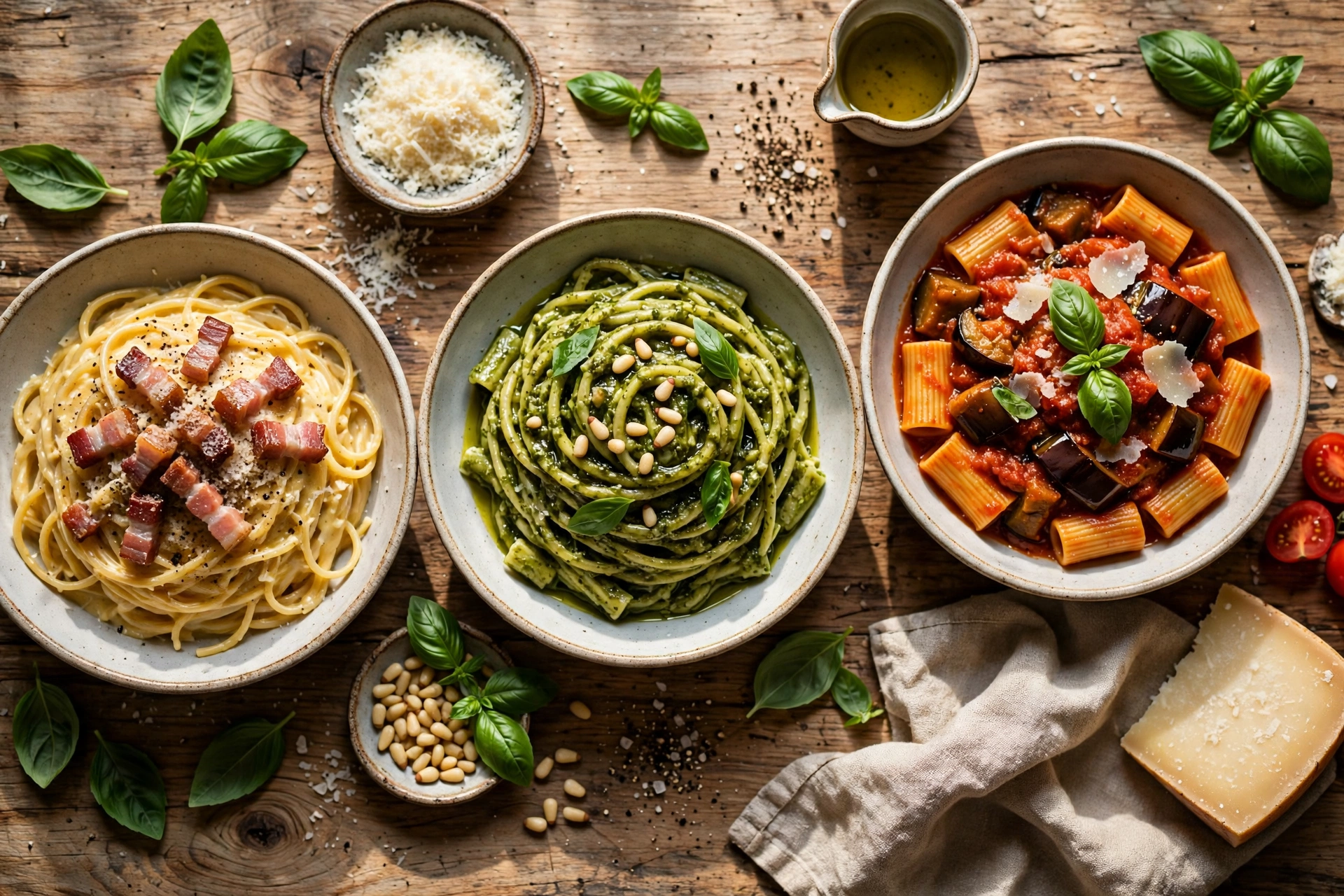
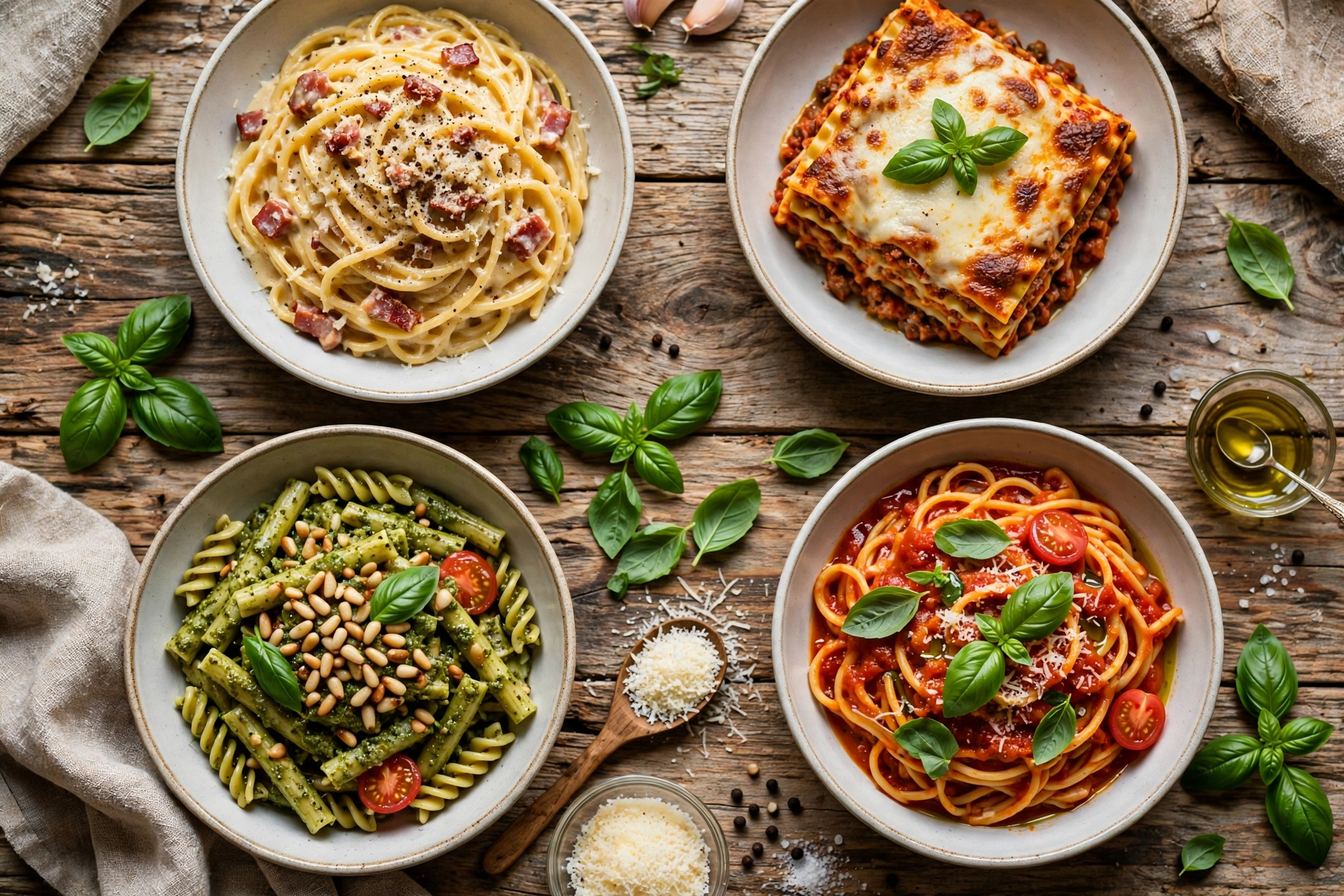
These are the 25 essential pasta dishes to eat in Italy the classics every pasta lover should try at least once, from Roman carbonara to Sicilian pasta alla Norma. Italy has hundreds of regional pasta dishes, but these 25 are the ones that define Italian cooking, and this list of the 25 essential pasta dishes to eat in Italy covers every region, from Piedmont in the north to Sicily in the south.
Each dish below comes from a real place with a real story, and most of them use only a handful of ingredients. That is the secret of Italian pasta: simple food, cooked properly, with no shortcuts.
What Are the 25 Essential Pasta Dishes to Eat in Italy?
The 25 essential pasta dishes to eat in Italy are not a restaurant ranking or a tourist list. They are the dishes Italians themselves cook at home and order in trattorias: the Roman pastas, the filled pastas of Emilia-Romagna, the seafood pastas of the coast, and the vegetable pastas of the south. A dish earns its place here because it has lasted for generations and because it tastes unmistakably of the place it comes from.
The 25 Essential Pasta Dishes to Eat in Italy
1. Spaghetti Carbonara Rome
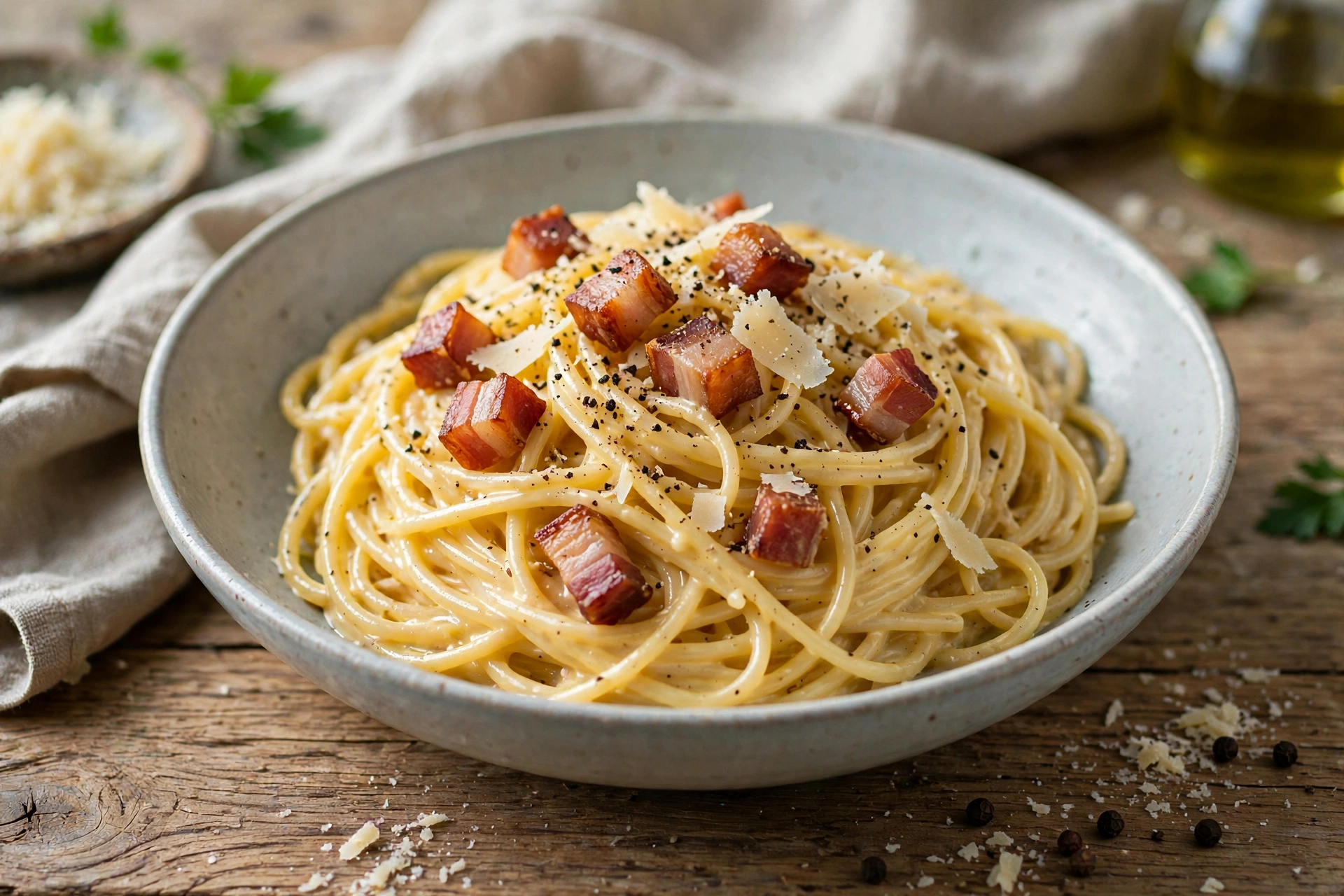
No list of the 25 essential pasta dishes to eat in Italy is complete without carbonara. Spaghetti tossed with eggs, Pecorino Romano, guanciale, and black pepper — no cream, ever. The heat of the pasta cooks the egg into a silky sauce, and the guanciale gives it a salty, smoky depth. It is the most famous Roman pasta for a reason.
2. Cacio e Pepe Rome
Three ingredients: spaghetti or tonnarelli, Pecorino Romano, and black pepper. The cheese melts into the starchy pasta water to make a creamy sauce with no butter and no cream. It looks simple and it is simple, but the technique takes practice — too much heat and the cheese clumps, too little and the sauce stays thin.
3. Spaghetti all’Amatriciana Rome
From the town of Amatrice, this is spaghetti in a tomato sauce with guanciale and Pecorino Romano. The guanciale renders its fat into the sauce, giving it a richness that pancetta cannot match. It is one of the four great Roman pastas, alongside carbonara, cacio e pepe, and gricia.
4. Lasagna alla Bolognese Bologna
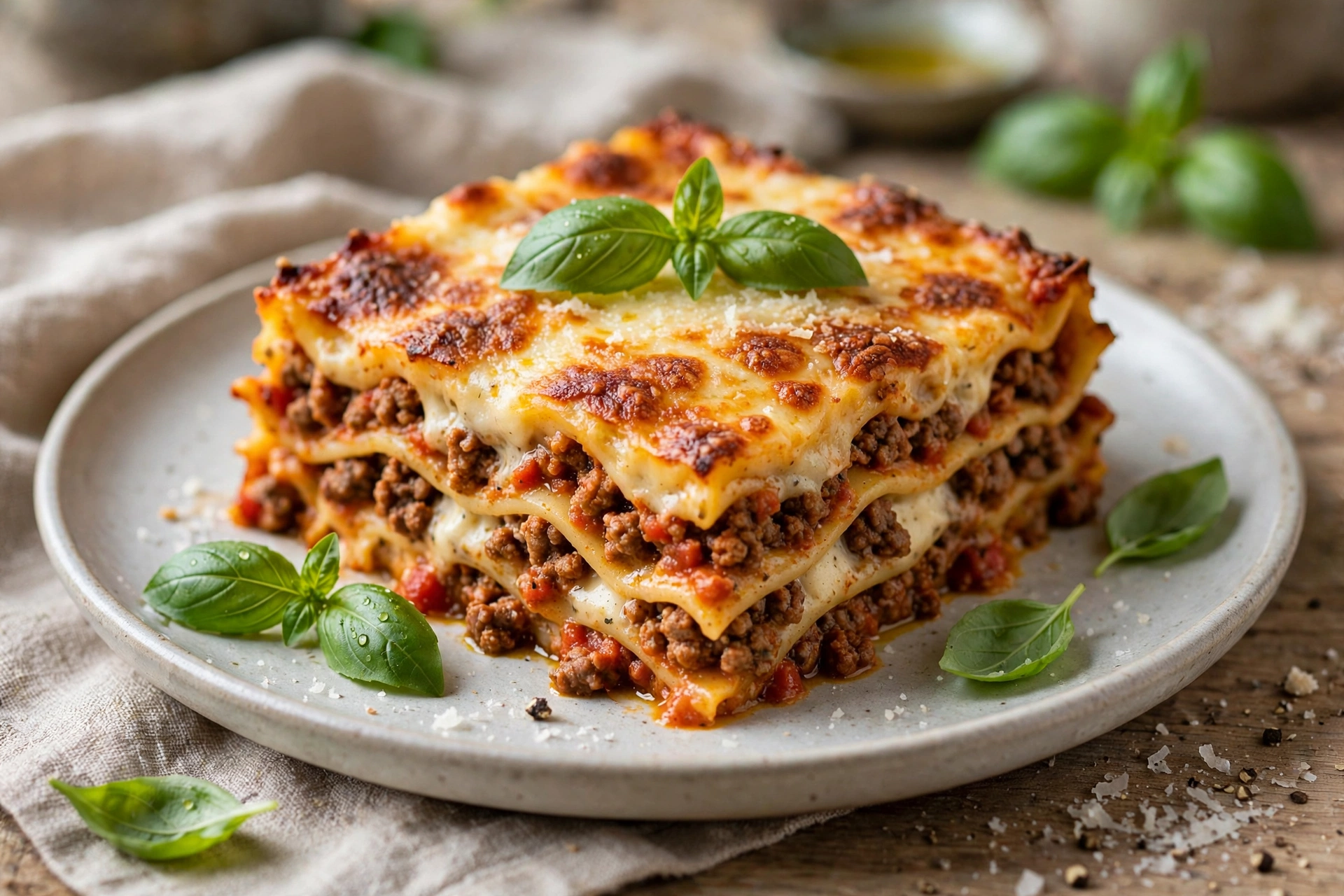
Layers of fresh egg pasta, slow-cooked ragù, béchamel, and Parmigiano, baked until the top is golden and the edges are crisp. The ragù takes hours, not minutes, and that patience is what makes a real Bolognese lasagna. It is the Sunday dish of Emilia-Romagna.
5. Tagliatelle al Ragù Bologna
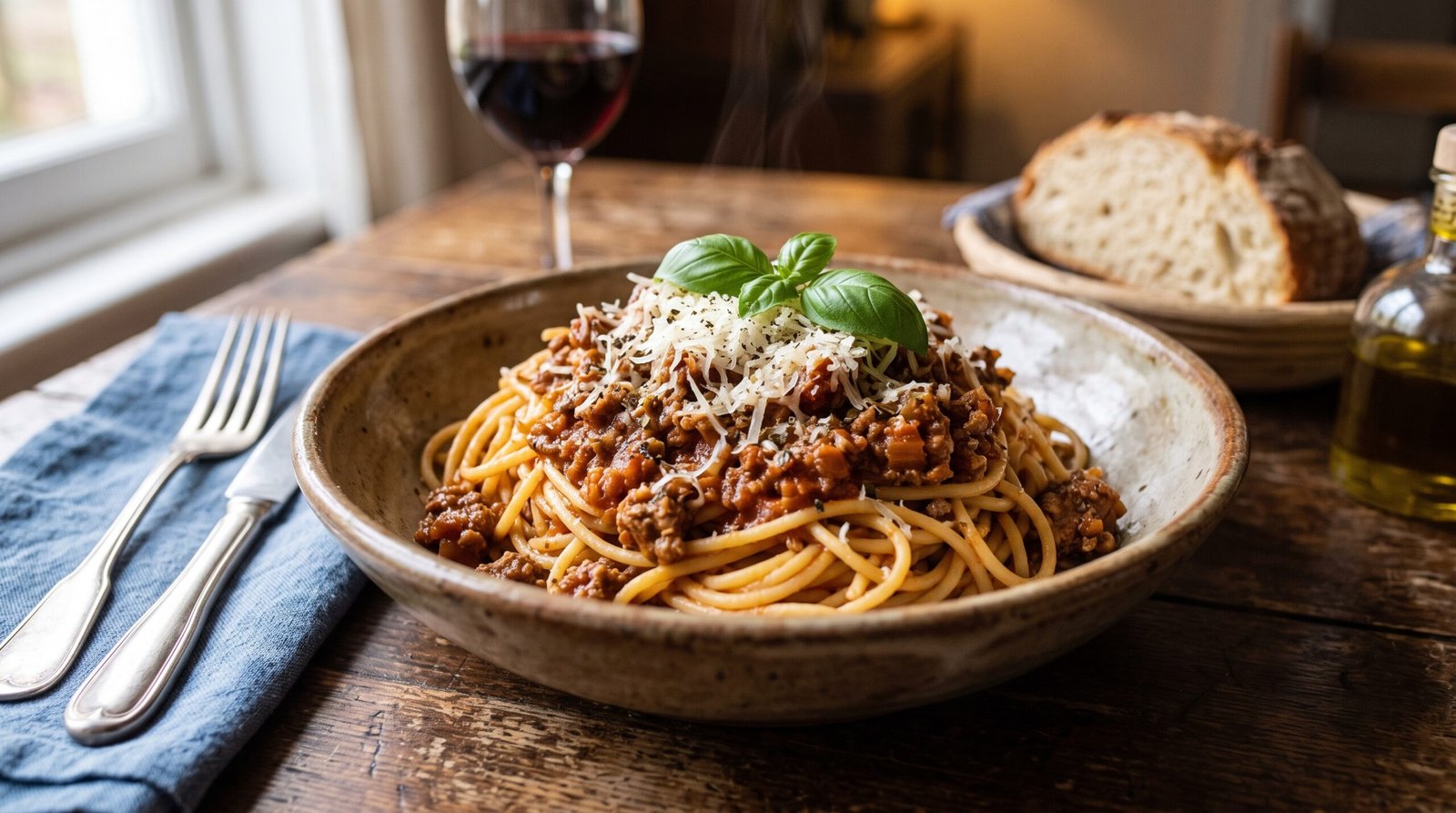
The dish the world calls spaghetti Bolognese is actually tagliatelle al ragù. Wide ribbons of fresh egg pasta hold the slow meat sauce far better than spaghetti ever could. The ragù is mostly meat and a little tomato, cooked low and slow for at least two hours.
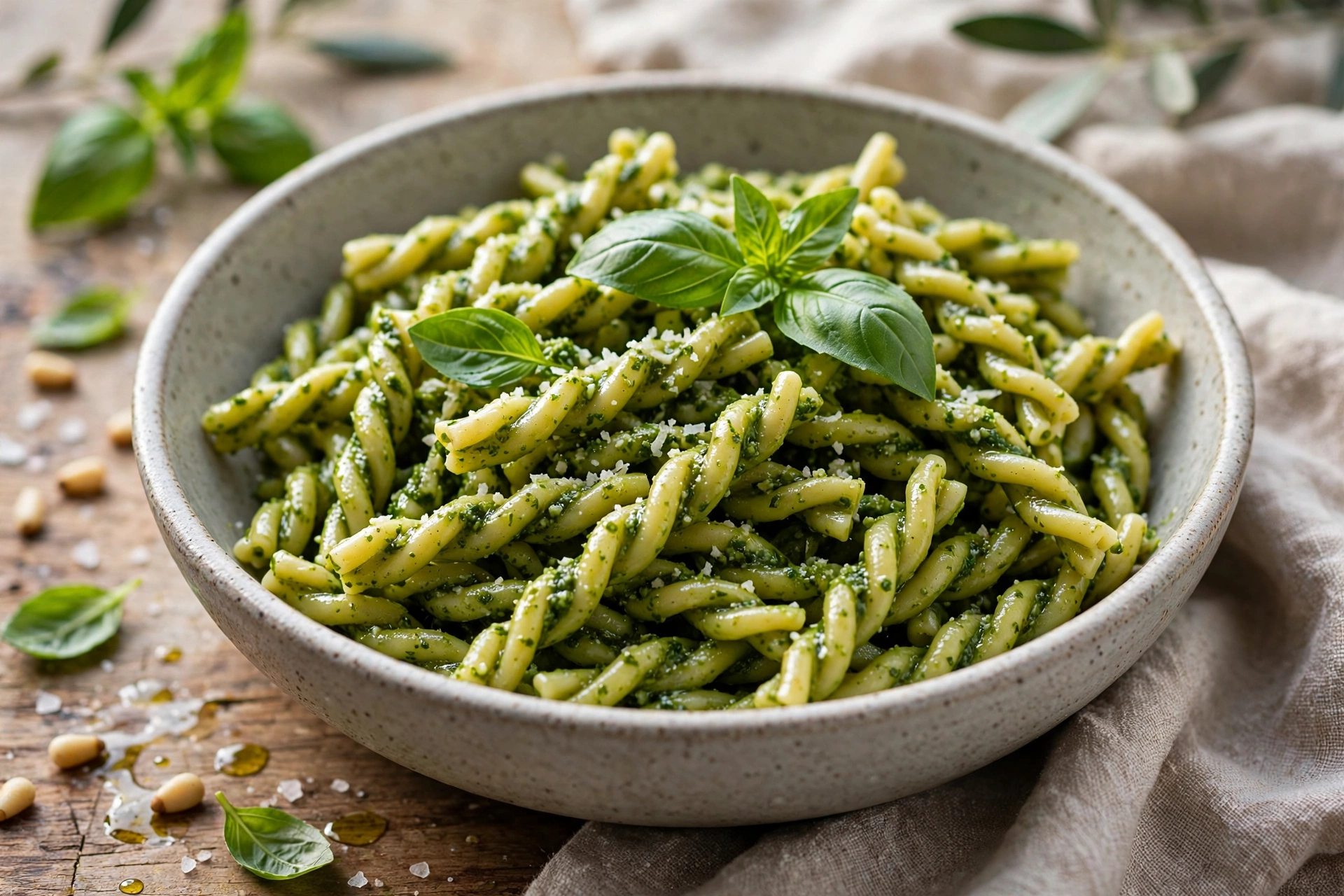
6. Trofie al Pesto Liguria
Short, twisted pasta from Liguria tossed in pesto Genovese: basil, pine nuts, garlic, Parmigiano, Pecorino, and olive oil, pounded by hand. It is often served with green beans and potatoes cooked in the same pot, a combination that sounds strange and tastes perfect.
7. Orecchiette con Cime di Rapa Puglia
Little ear-shaped pasta from Puglia with bitter broccoli rabe, garlic, chilli, and anchovy. The cup shape of the orecchiette traps the sauce, and the bitterness of the greens balances the richness of the oil. It is the most famous dish of Puglia’s home cooking.
8. Spaghetti alle Vongole Naples
Spaghetti with clams, garlic, white wine, olive oil, and parsley — one of the 25 essential pasta dishes to eat in Italy that every visitor should try on the coast. The clams open in the pan and release their juice into the sauce. Never order it with cheese: Italians consider cheese on seafood pasta a crime.
9. Pasta alla Norma Sicily
From Catania, this is pasta with fried aubergine, tomato sauce, basil, and salty ricotta salata. It is named after Bellini’s opera Norma, and Sicilians say it is as much a masterpiece as the music. The aubergine must be fried until soft and golden, never soggy.
10. Penne all’Arrabbiata Rome
Angry pasta: penne in a spicy tomato sauce with garlic and dried chilli. The name comes from the heat, and the dish is a test of a cook’s nerve — enough chilli to warm you up, never so much that it hides the tomato. It is the late-night pasta of Rome.
11. Fettuccine Alfredo Rome
Fresh fettuccine tossed with butter and Parmigiano until the cheese melts into a glossy sauce. The original Roman version has no cream at all — the cream version is an American invention. In Rome, it is a simple, rich dish that shows off the quality of the pasta itself.
12. Agnolotti del Plin — Piedmont
Small pinched ravioli from Piedmont, filled with roasted meat and served in broth or with butter and sage. The “plin” is the pinch that seals each piece, and a good batch has dozens of identical little parcels. It is the pasta of Piedmont’s family Sundays.
13. Tortellini in Brodo — Emilia-Romagna
Tiny rings of filled pasta floating in a clear meat broth, served on Christmas Day across Emilia-Romagna. The filling is pork, prosciutto, mortadella, and Parmigiano, and the broth must be clear and rich. It is comfort food at its most elegant.
14. Ravioli di Ricotta e Spinaci — Tuscany
Fresh ravioli filled with ricotta and spinach, served with butter and sage or a light tomato sauce. The filling must be smooth and well seasoned, and the pasta thin enough to see the green through it. It is the filled pasta every Italian grandmother judges you by.
15. Pappardelle al Cinghiale — Tuscany
Wide ribbons of pasta with a slow-cooked wild boar ragù, a dish that belongs on any list of the 25 essential pasta dishes to eat in Italy. The sauce is dark, rich, and a little gamey, and the wide pappardelle is the only shape sturdy enough to carry it. It is the taste of the Tuscan hills.
16. Spaghetti Aglio e Olio — Naples
Spaghetti with garlic, olive oil, chilli, and parsley — the simplest pasta in Italy and one of the hardest to get right. The garlic must be golden, never brown, and the oil must coat every strand. It is the dish Italians cook at midnight when there is nothing else in the house.
17. Pasta alla Puttanesca — Naples
Spaghetti with tomato, olives, capers, anchovy, and chilli — a salty, punchy sauce made from pantry ingredients. The name is rude and the flavour is bold. It is the pasta of Naples’ back streets, and it takes less than twenty minutes from pan to plate.
18. Gnocchi alla Sorrentina — Campania
Soft potato gnocchi baked in tomato sauce with mozzarella and basil until the cheese bubbles. It comes from Sorrento on the Amalfi Coast, and it is the dish to order when you want something warm, simple, and deeply satisfying. The gnocchi must be light, never heavy.
19. Linguine allo Scoglio — The Coast
Linguine with a mix of seafood — mussels, clams, prawns, and squid — in a light tomato and white wine sauce. The name means “linguine of the rock”, and every coastal town has its own version. The seafood must be fresh, and the pasta must be finished in the pan with the sauce.
20. Cannelloni di Carne — Emilia-Romagna
Fresh pasta tubes filled with meat and ricotta, covered in béchamel and tomato sauce, and baked until golden. It is a celebration dish, made for Sundays and holidays, and the filling must be rich enough to stand up to the baking. Leftovers, if there are any, taste even better the next day.
21. Farfalle al Salmone — Lombardy
Bow-tie pasta with smoked salmon in a light cream sauce with a touch of vodka or lemon. It is a modern classic, born in the restaurants of Milan, and it shows the lighter, northern side of Italian cooking. The salmon must be added at the very end so it stays silky.
22. Rigatoni alla Vodka — Rome
Rigatoni in a tomato and cream sauce with a splash of vodka, which sharpens the tomato and helps the sauce cling to the pasta. The 25 essential pasta dishes to eat in Italy include a few surprises, and this is one of them — a dish that travelled from Italy to New York and back again.
23. Pasta e Fagioli — Veneto
Pasta and beans, the soupy, hearty dish of the Veneto countryside. Short pasta simmers in a thick bean broth with pancetta, rosemary, and olive oil until everything is soft and savoury. It is peasant food in the best sense: cheap, filling, and full of flavour.
24. Spaghetti al Pomodoro — Naples
Spaghetti with a fresh tomato sauce, basil, and garlic — the dish that proves Italian cooking needs nothing fancy. The tomatoes must be ripe and sweet, the basil fresh, and the pasta cooked al dente. Every Italian has an opinion on the right way to make it, and every one of them is correct.
25. Culurgiones — Sardinia
Sardinia’s filled pasta, shaped like a little ear of wheat and filled with potato, pecorino, and mint. The shape is sealed with a braided edge that takes years to master, and the mint in the filling is the surprise that makes it unforgettable. It is the most beautiful pasta on this list.
How to Eat Like an Italian
When you order the 25 essential pasta dishes to eat in Italy in a restaurant, remember a few rules. Pasta is a first course, not a main — it comes before the meat or fish. Never cut spaghetti with a knife, and never ask for cheese on seafood pasta. Finish the pasta in the sauce, not the other way round, and always save a little pasta water: it is the secret to a sauce that clings. That is how Italians eat the 25 essential pasta dishes to eat in Italy — simply, and with respect for the ingredients. For more Italian pasta recipes, read our 34 best Italian pasta recipes and our best pasta recipes.
Frequently Asked Questions
1. What are the 25 essential pasta dishes to eat in Italy?
The 25 essential pasta dishes to eat in Italy include carbonara, cacio e pepe, amatriciana, lasagna alla Bolognese, tagliatelle al ragù, trofie al pesto, orecchiette con cime di rapa, spaghetti alle vongole, pasta alla Norma, and penne all’arrabbiata — the classics from every region, from Rome to Sicily.
2. Which of the 25 essential pasta dishes to eat in Italy is the most famous?
Spaghetti carbonara is the most famous, followed by lasagna and spaghetti Bolognese — though real Bolognese is tagliatelle al ragù, not spaghetti. Cacio e pepe is the most loved by chefs, because three ingredients leave nowhere to hide.
3. What is the best pasta dish to try first in Italy?
Start with carbonara in Rome, tagliatelle al ragù in Bologna, and pasta alla Norma in Sicily. Those three dishes show you the range of Italian pasta: rich and eggy, slow and meaty, and bright and vegetable-led. Our cavatappi pasta recipes are a good place to start cooking them at home.
4. Is spaghetti Bolognese a real Italian dish?
Not with spaghetti. The real dish is tagliatelle al ragù from Bologna, and Italians will tell you spaghetti is the wrong shape — the sauce slides off it. Spaghetti Bolognese is an American and British invention, and it is still delicious, just not Italian.
5. Can I make these pasta dishes at home?
Yes — most of them need only a few ingredients and one pan. Start with aglio e olio or cacio e pepe, then try carbonara and amatriciana. Fresh pasta helps, but good dried bronze-cut pasta works for most of these dishes. See our creamy pasta recipes for more ideas.
6. Where should I eat pasta in Italy?
Eat in small trattorias away from the main squares, where the menu is short and handwritten. Order the house speciality, drink the house wine, and skip the places with pictures of the food outside. The best pasta is usually in the least fancy room. For the full story of pasta itself, see pasta on Wikipedia.
Final Thoughts
These 25 essential pasta dishes to eat in Italy are the heart of Italian cooking, and every one of them is worth a place on your table. Start with the 25 essential pasta dishes to eat in Italy above, cook them simply, and let the ingredients do the work. Once you have tasted a real carbonara in Rome or a real Norma in Sicily, the dry box in your pantry will never look the same again. For more, read our cavatappi pasta recipes and our 34 best Italian pasta recipes.